
This Is the Right Length for Your Gutter Downspouts

We may earn revenue from the products available on this page and participate in affiliate programs. Learn More ›
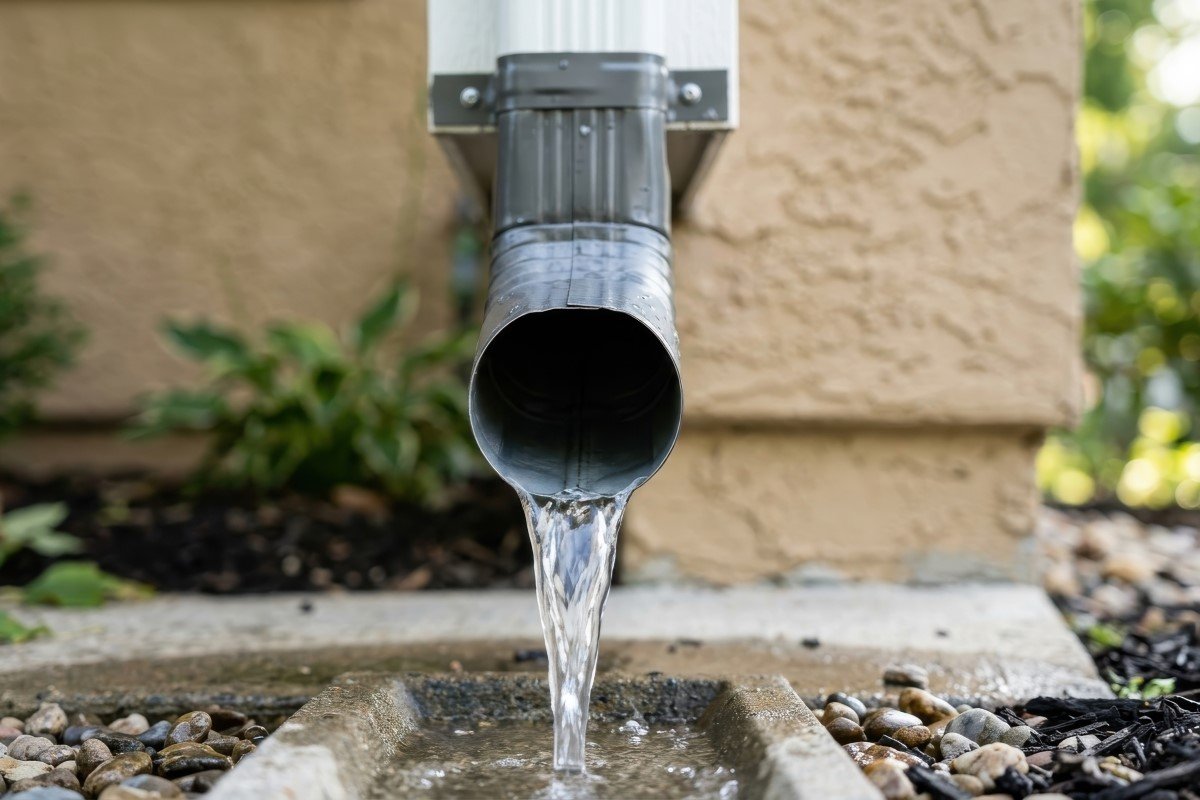
Downspouts play a vital role in protecting your home. As water collects in the gutter, it flows toward the downspout, which sends the water from the roof to the ground while also directing it away from the house. But while downspouts are vital, they often aren’t enough by themselves to guide rainwater away from the foundation.
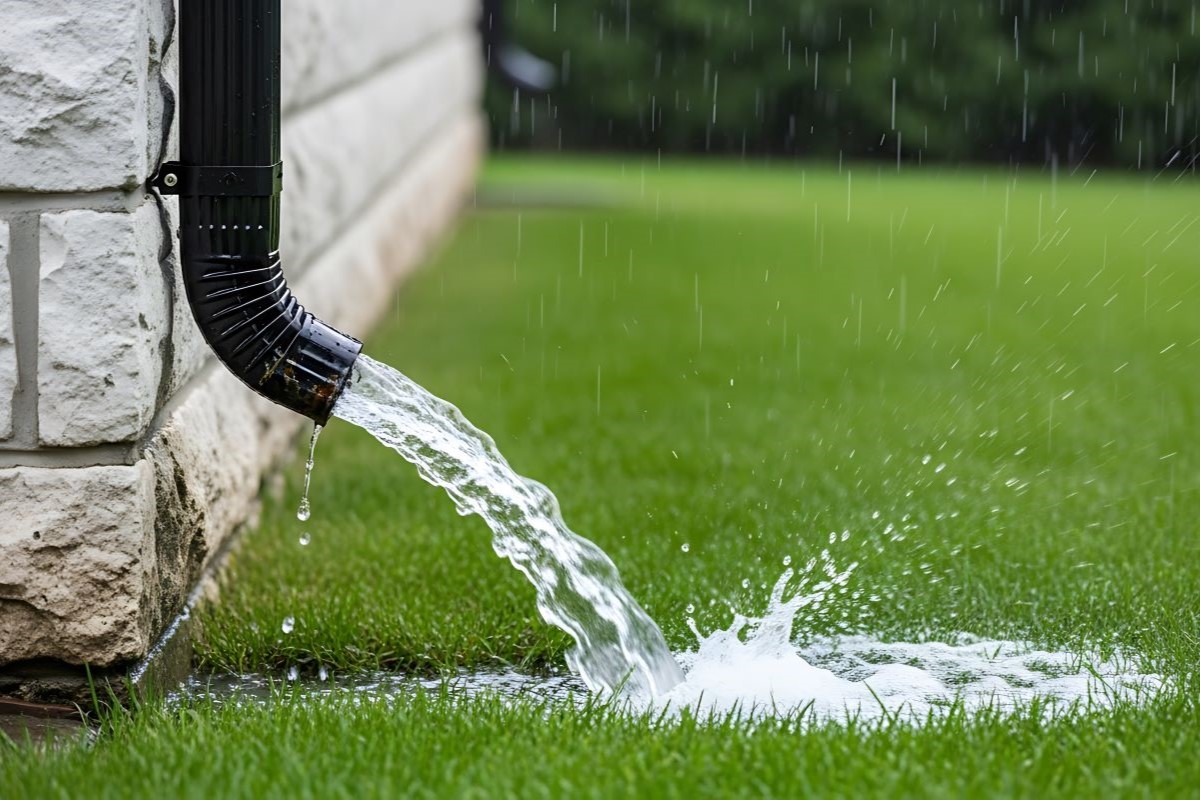
Water flowing out of the downspout can pool against your home and leak into the basement or even cause structural damage to the foundation. The solution is to add an extender to the end of the gutter downspout. These tubes are about 4 to 6 feet long and direct water away from your home.
Why You Need an Extender
If rainwater is allowed to pool around a foundation, it can eventually leak into your basement or crawl space because water can weaken a concrete foundation and lead to cracks. Over time, water can also soften the soil around the foundation, resulting in uneven house settling. Soil that stays wet also attracts pests, including termites.
Signs You Need to Add an Extender
There are several telltale signs that your downspout isn’t directing water far enough from your home and that you need to add an extender to your downspouts. Mike Feazel, CEO of Roof Maxx says: “If you’re seeing pooling, erosion, or moisture near the base of the home then a splash block alone probably won’t be enough.”
Exterior Signs:
- Puddles of water around the foundation following a heavy rainstorm
- Soil and mulch erosion below the downspout
- Yellowing plants in nearby landscaping
Interior Signs:
- White powdery efflorescence on the basement walls
- Hairline cracks on your foundation
- Leaks in the basement
- Musty smell in your crawl space.
How Long a Downspout Should Extend
An extender must be long enough to carry water from the downspout to a part of your yard that slopes away from the home. An extender should direct water 4 to 6 feet away from the foundation to ensure it doesn’t flow back to the foundation or saturate the soil around it, according to Feazel. “In areas that have poor drainage or heavy runoff, you could push it even further out,” he says.
Soil Type Plays a Factor
The type of soil in your yard plays a factor in determining the optimal length of your downspout extender. A 5-foot-long extender should be enough for loamy and sandy soil that drains quickly. If you have heavy clay soil that can retain moisture for a long time, you may need a longer 8- to 10-foot-long extension to prevent the soil around the foundation from becoming soggy and muddy.
Slope Is Key
An extender can’t do its job unless it slopes downward from the point where it connects from the downspout to the opening. The extender should drop at least a 1/4 of an inch per foot from the downspout to its opening to prevent clogs and to ensure water doesn’t pool inside of it. “Slope it downward so water can continue to move away from the house,” Feazel says. “Even a small grade can help prevent water from sitting or flowing back toward the foundation.”
Choose the Right Extender
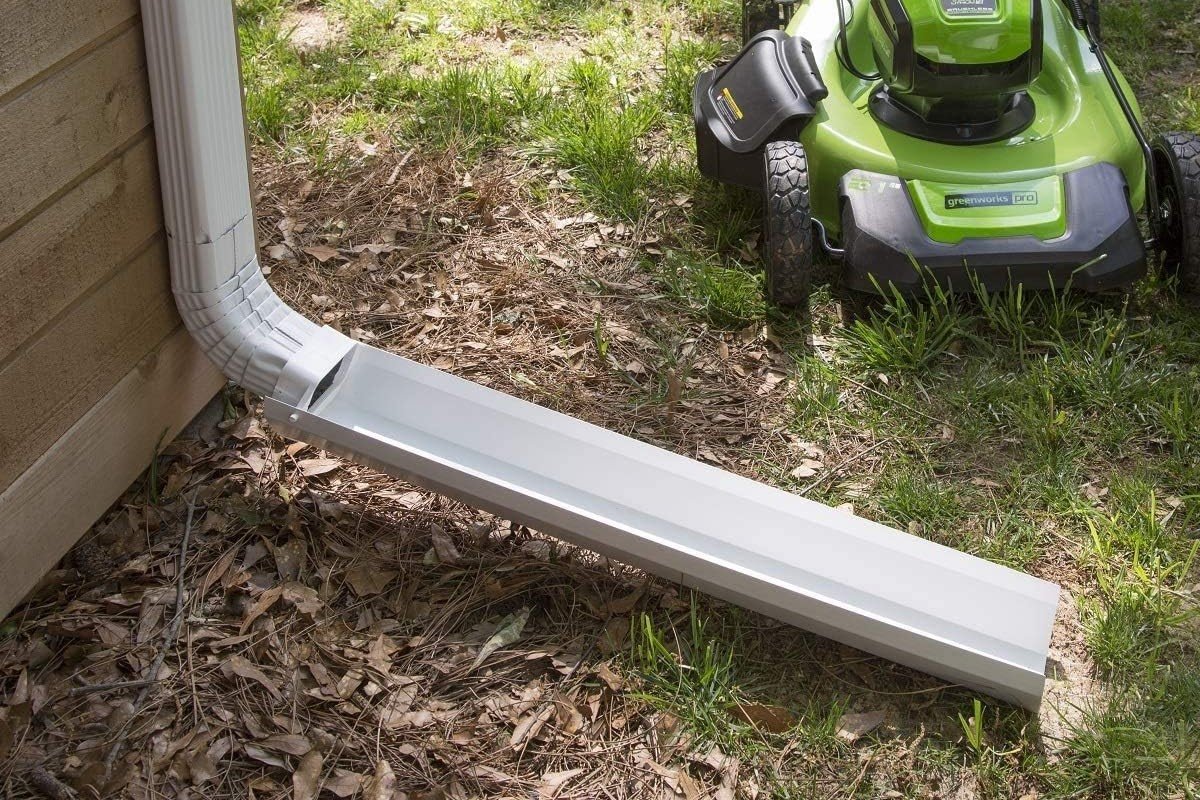
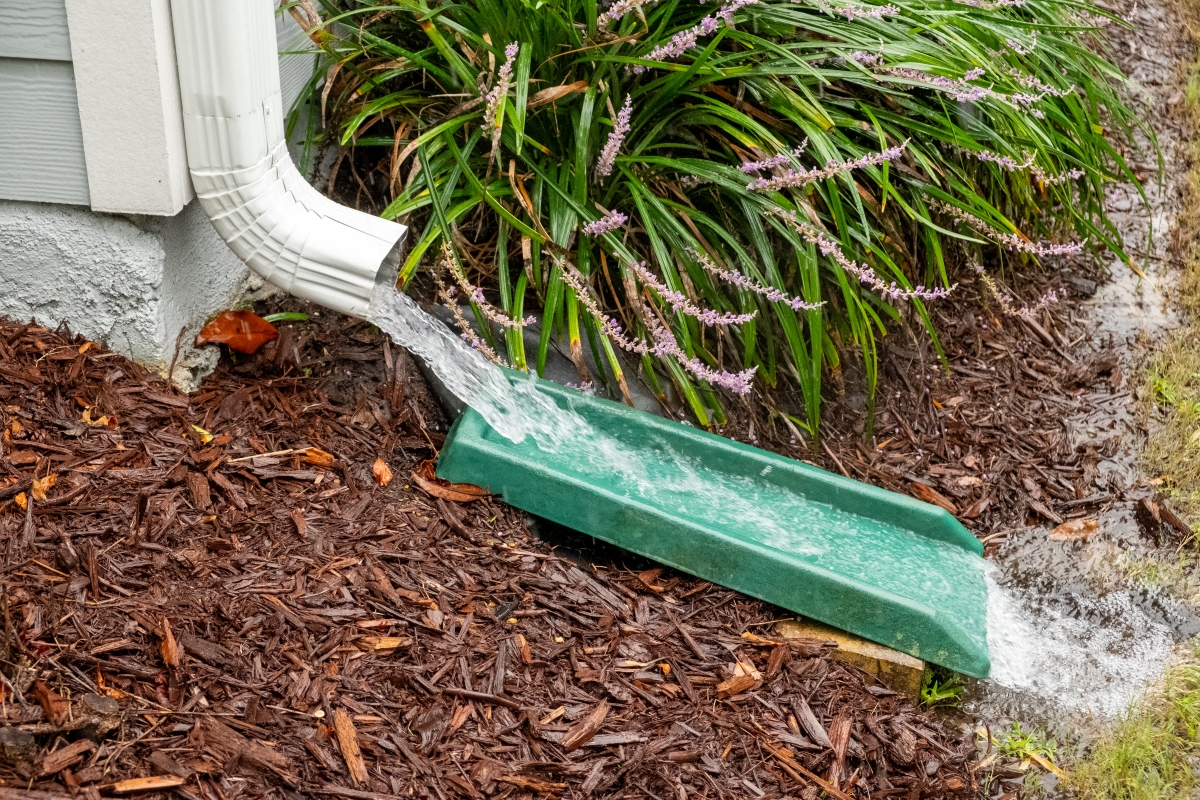
Extenders come in a variety of types including plastic tubes and trays that flip up. Corrugated flexible plastic tubes are ideal for extending the downspout in and around landscaping. A flipper extension is a good choice for extending into your lawn as you can flip them up when it’s time to mow.
When a Splash Block Is Enough
A splash block is a 2- to 3-foot-long rectangular shaped concrete or plastic pad that sits under the downspout. Its primary purpose is to prevent water from creating holes in the dirt and splashback onto your siding as water pours out of the downspout. Since it only directs water about 2 feet away from the foundation, it often isn’t enough to prevent water from building up around the foundation. The ground around a home must slope sharply away from the foundation (about 6 inches in the first 6 feet) for a splash block to be sufficient.
Downspout Length Is Important
The downspout elbow should hover about 6 to 12 inches off the ground to allow for enough downward slope to support an extension. If the elbow is too low to the ground, the extender won’t slope downward at a sharp enough angle to move water away from the home and prevent clogs from forming inside of it. If you’re using a splash block, extend the downspout lower to the ground to prevent water from splashing back onto your home’s siding.
Add a Debris Catcher for Longer Extensions
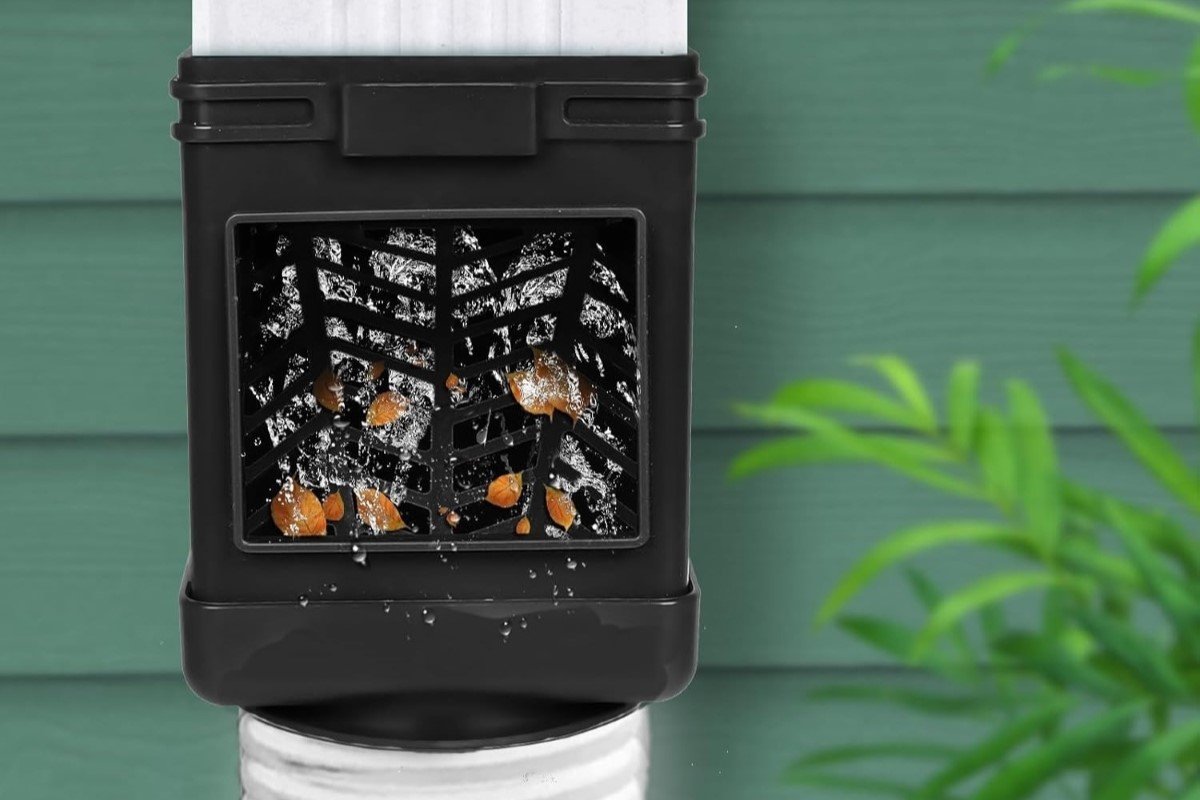
Extenders are more susceptible to clogs from leaves, twigs, and other debris that ends up in the gutters due to their length. If your gutters don’t have gutter guards, consider adding an inline debris filter box on the downspout to prevent leaves and other debris from clogging up the extension.
The Number of Downspouts You Need
As a rule of thumb, one downspout is recommended for about every 30 feet of gutter to properly drain the gutters without allowing them to overflow. Homes with steeper pitches should have one for about 20 feet of gutter while homes with shallow pitched roofs can get by with one for every 40 feet.
Where to Locate Downspouts
Place gutters at corners of your house or in valleys, which is any location where two roof planes intersect, as these areas will collect a high amount of water. “What you want to ensure is that you can move water off the roof efficiently and away from the foundation as quickly as possible,” Feazel says. Avoid putting downspouts above walkways or in heavy traffic areas which could cause the ground to become slippery.

Curb Appeal Updates You’ll Appreciate Even If You Aren’t Selling Your Home