
5 Best Body Lotions for Aging Skin 2026, Tested and Reviewed

Frequently asked questions
Why do you need body lotion for aging skin?
You need body lotion for aging skin because it helps replenish moisture, strengthen the skin barrier, and improve the appearance of common age-related concerns, like dryness, rough texture, fine lines, and loss of firmness. “As we age, the integrity of our skin barrier weakens, which predisposes us to dryness and rougher skin,” says Dr. Castilla. Consistent use can make skin look smoother, plumper, and more radiant while supporting its overall health.
How often should you use a body lotion for aging skin?
You should be applying body lotion twice a day, in the morning and at night, says Kenneth Mark, MD, a cosmetic dermatologist in New York City. If you use a retinol, the dermatologists we spoke with recommend using it at night rather than during the day. Retinol creams are also best applied only twice per week until your skin builds up tolerance, then you can apply them every day.
Are there other ways to tighten skin and minimize wrinkles?
Yes, in addition to using a body lotion, ingredients like retinol, PHAs, urea, and lactic acid can help tighten skin and minimize the appearance of wrinkles by boosting cell turnover, supporting collagen production, and improving hydration and texture. Dr. Kobets also recommends using a gentle, non-stripping body cleanser and applying body moisturizer to damp skin to lock in hydration.
What should you look for in a body lotion to address wrinkles?
Look for a body lotion that both deeply hydrates and actively supports skin repair. Dr. Kobets recommends formulas with retinol or bakuchiol to help boost collagen and improve the look of fine lines, along with hydrators like hyaluronic acid and glycerin, antioxidants such as niacinamide and vitamin C, and barrier-repair ingredients like ceramides and squalane. Body lotions with gentle exfoliants such as lactic acid and polyhydroxy acids (PHAs) can also help these anti-aging ingredients absorb more effectively. “Together these ingredients support cell turnover, stimulate collagen synthesis, improve tone, and help the skin appear firmer and more youthful over time,” she says.
What do dermatologists recommend for aging skin over 60?
Dermatologists recommend that people over 60 focus on choosing body lotions that restore moisture, strengthen the skin barrier, and support collagen production, since mature skin naturally becomes drier, thinner, and more prone to wrinkles and crepiness. That means choosing body lotions with a mix of hydrating, repairing, and anti-aging ingredients rather than relying on hydration alone.
Effective formulas often combine collagen-supporting actives like retinol or bakuchiol, as well as hydrators such as hyaluronic acid and glycerin, antioxidants like niacinamide and vitamin C, and barrier-repair ingredients including ceramides and squalane, says Dr. Kobets. Gentle exfoliating acids such as lactic acid and polyhydroxy acids (PHAs) can further improve texture and help active ingredients work more effectively.
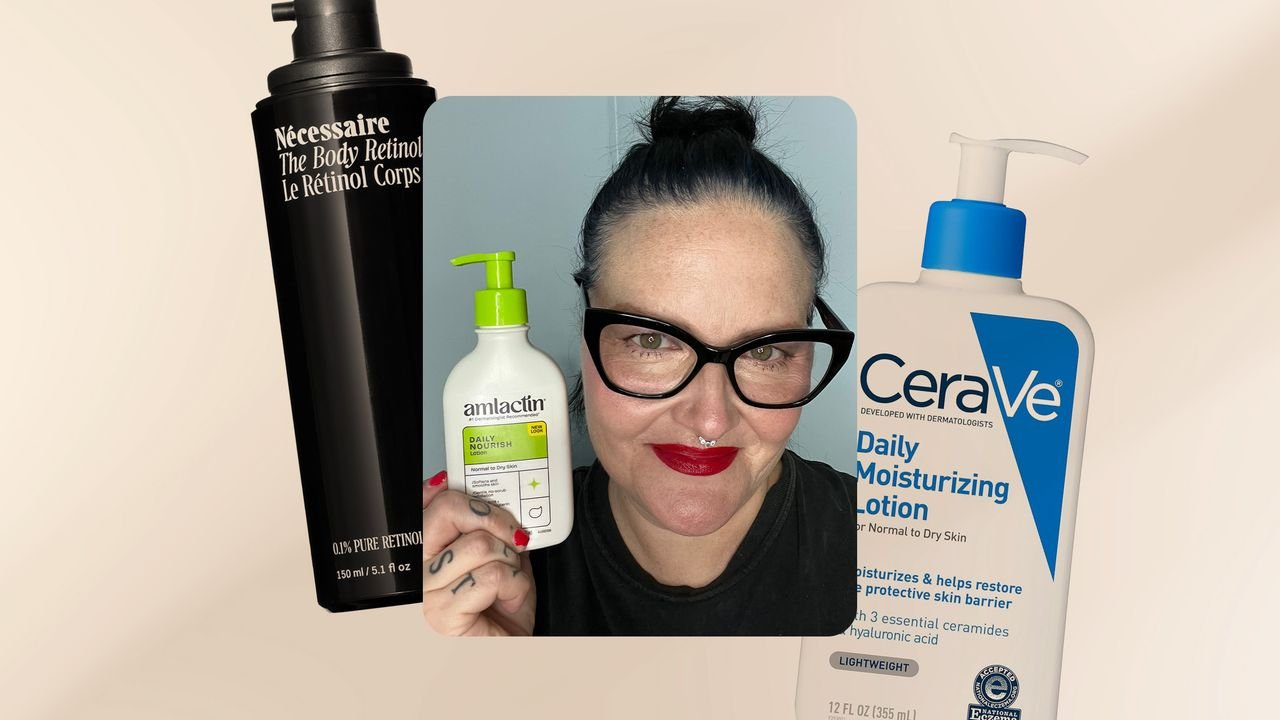
We tapped our Glamour network of mature testers ages 50-plus to test top-rated body lotions and evaluate how well they addressed common aging skin concerns, like dryness, crepiness, uneven tone, and loss of firmness. They assessed everything from texture and absorbency to how their skin looked and felt after several weeks of consistent use, prioritizing formulas that delivered visible improvements without feeling heavy or greasy.
To guide our selections, we also spoke with dermatology experts to identify the most effective ingredients for aging skin, including retinol, vitamin C, and exfoliating acids like AHAs and BHAs. Most of the standout formulas also included hydrating and barrier-supporting ingredients like hyaluronic acid and ceramides to help lock in moisture and keep skin soft and supple. The best lotions absorbed quickly, felt comfortable for daily use, and helped improve the appearance of fine lines, wrinkles, hyperpigmentation, and crepiness with continued use.