
10 Plants That Help Control Erosion on Steep Properties

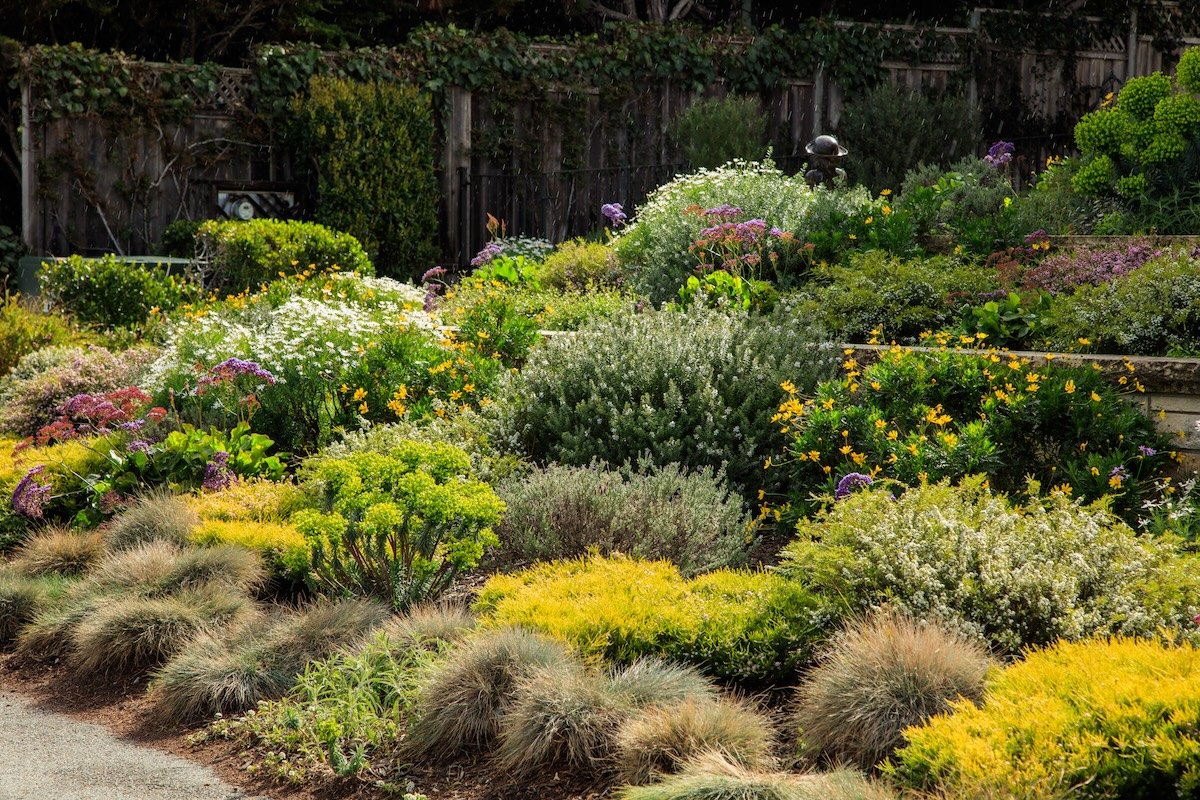
Even a slight slope in your landscape can lead to water runoff and erosion when wind or water moves across unprotected ground, removing soil particles along the way. Left unchecked, erosion can carve deep gullies and undermine pavement, buildings, and other structures.
Fortunately, certain plants are effective in slowing or preventing erosion on gentle or moderately steep slopes. Gentle slopes have a rise of at most 1 foot for every 20 feet horizontally (a 1:20 ratio, or less than 5 percent grade). Once slopes become moderately steep, at 8 to 16 percent, water is more likely to run off before it soaks in, and soil is more likely to erode, which makes planting trickier. Ground-hugging and drought-tolerant plants are often the only option on moderate slopes. Slopes of 30 percent grade or more are too steep to mow, according to Iowa State University Extension and Outreach. Stopping erosion on steep slopes may require the help of a landscape architect and possibly the construction of retaining walls.
If you’ve had little luck growing plants on gentle to moderate slopes, consider these erosion-control contenders. Before you head out to the garden center, check the USDA Plant Hardiness Zone Map to ensure that the plant you’ve chosen will thrive in your area.
1. Creeping Sedum (Sedum spp.)
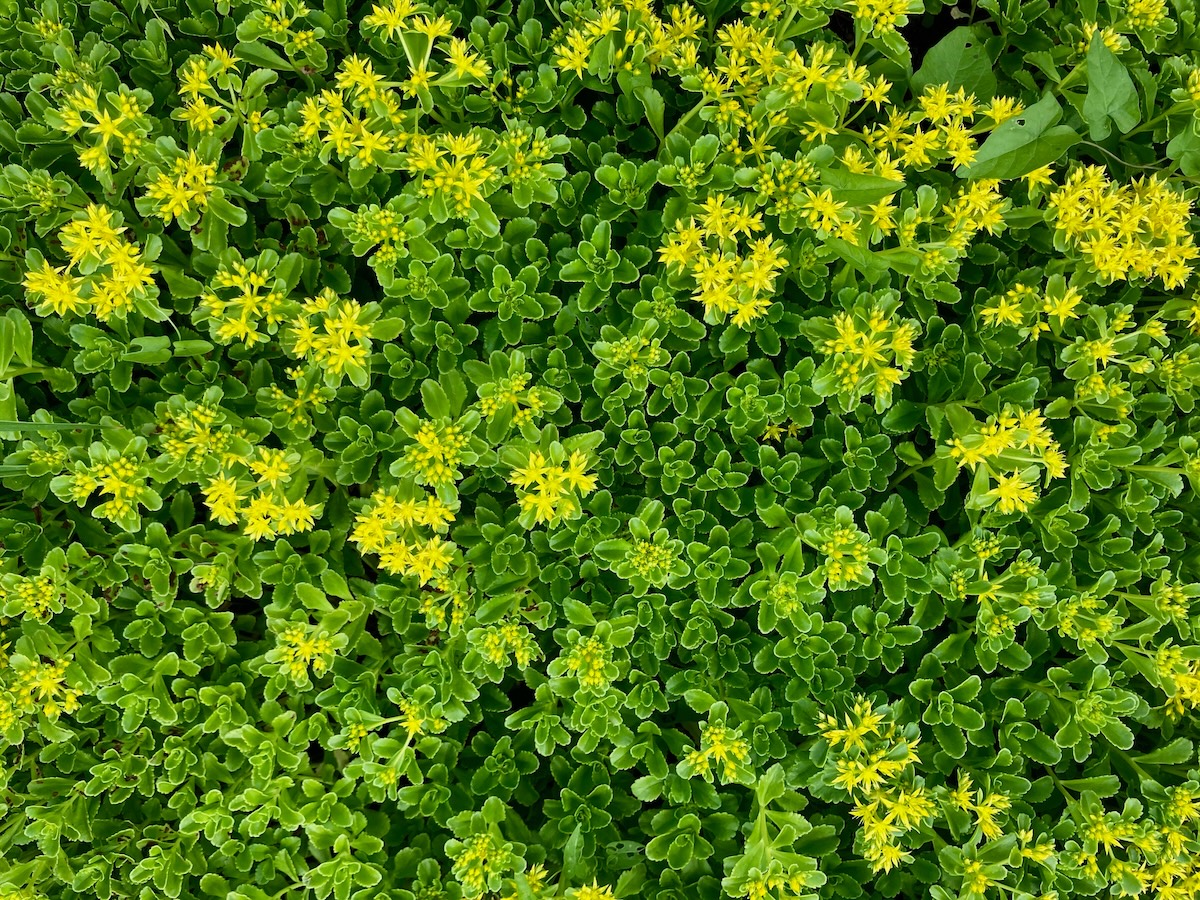
Also known as stonecrop, sedum is a versatile and drought-tolerant plant. Creeping sedums are excellent for erosion control because they hug the ground and form mats of succulent evergreen foliage. Varieties include Dragon’s Blood (S. spurium ‘Dragon’s Blood’), which features rounded leaves with crimson edges as well as vivid red summer flowers, and Angelina (S. rupestre ‘Angelina’), with spiky chartreuse foliage that sports reddish-orange tips in fall. As a bonus, sun-loving sedum is a low-maintenance ground cover, so you won’t have to fight the hill to prune or care for the plant.
Hardiness Zones: 3 to 9
Size: 2 to 6 inches tall
2. Fescue (Festuca and Schedonorus spp.)
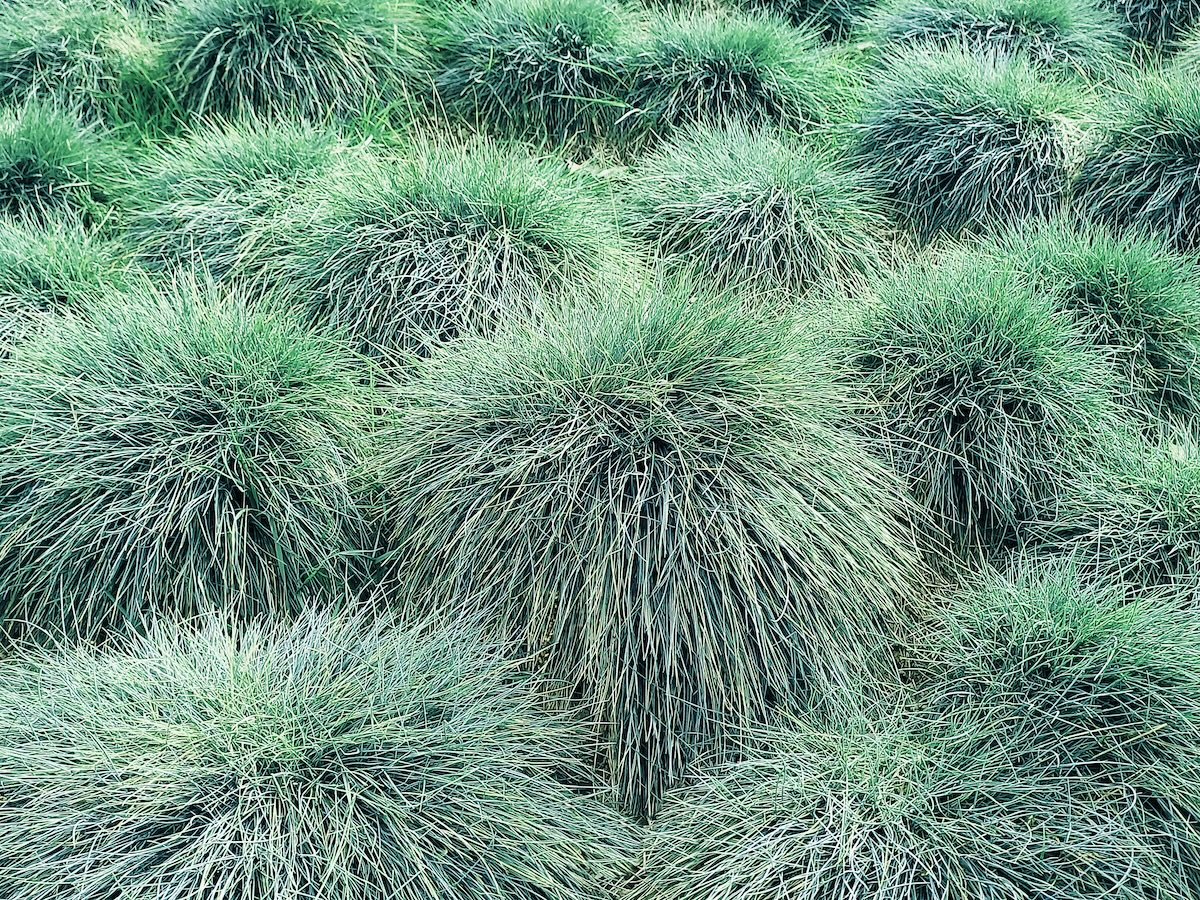
The best type of grass for erosion control is one that provides a dense root mass and tough foliage that holds up well under foot traffic with little maintenance. Tall fescue (S. arundinaceus) fits the bill, with roots that reach up to 3 feet deep for extra holding power. Fescue is also a shade-tolerant lawn grass, so it does fine around trees or structures. In fact, since fescue is a cool-season grass, it will fare better in shade and might go dormant in summer.
Fescue comes in both seed blends and as sod (which can be easier to start on a slope). Seed costs less but can take 4 to 6 weeks to fill in. Sod gives immediate coverage but requires more time for preparation and installation. Another ground cover option is blue fescue (F. glauca), a bunch grass that produces small clumps of gray-green foliage.
Hardiness Zones: 4 to 8
Size: Height depends on type and mowing
3. Manzanita (Arctostaphylos spp.)
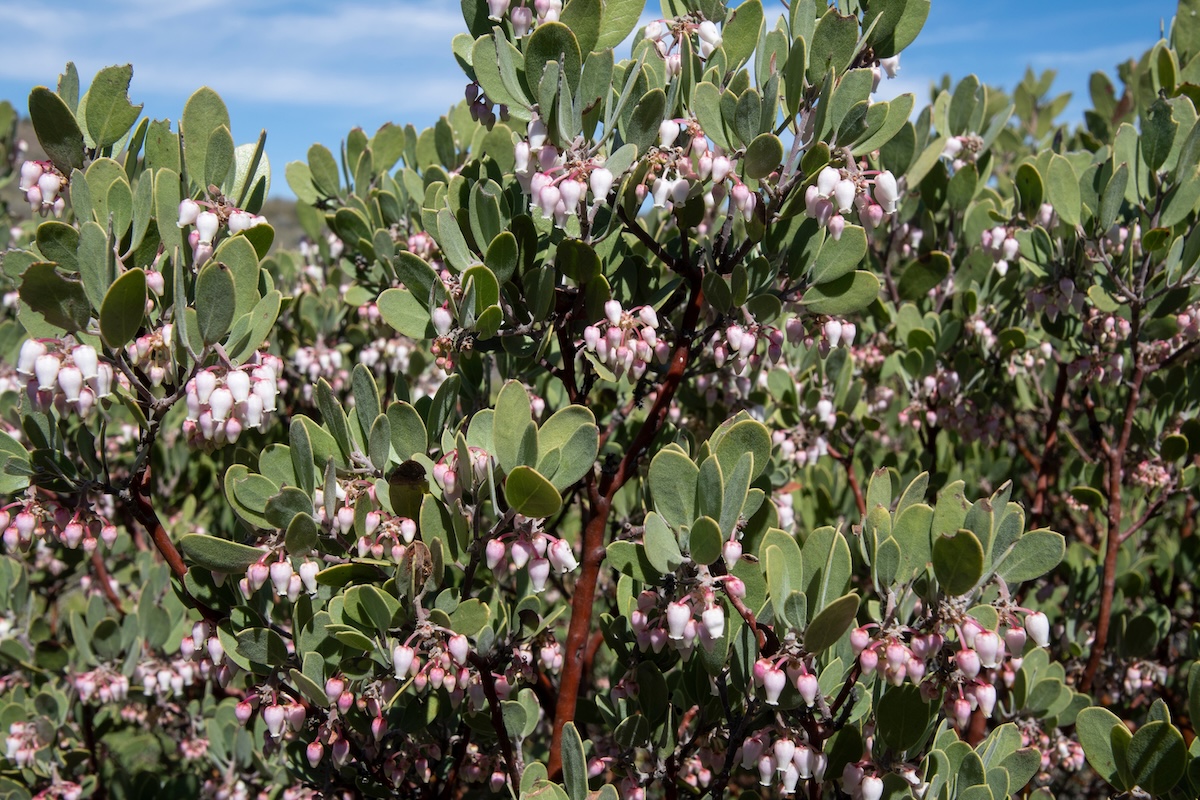
Combining shrubs and ground covers can improve erosion control. Working together with the shallow, matted roots of ground covers, the often deeper and more extensive roots of shrubs help keep soil in place. Manzanita is a native shrub with dozens of species, many of which offer erosion-control features. All manzanitas are drought-tolerant and enjoy full sun. Low-growing manzanitas, such as Emerald Carpet, can slow the force of heavy rain as it trickles through branches. Others, such as John Dourley, grow taller (2 to 3 feet) but also wider (5 to 6 feet) to help cover a slope. Be sure to check the plant’s mature height before buying.
Hardiness Zones: 6 to 10
Size: 1 foot to 7 feet (and taller), 4 to 10 feet wide
4. Japanese Spurge (Pachysandra terminalis)
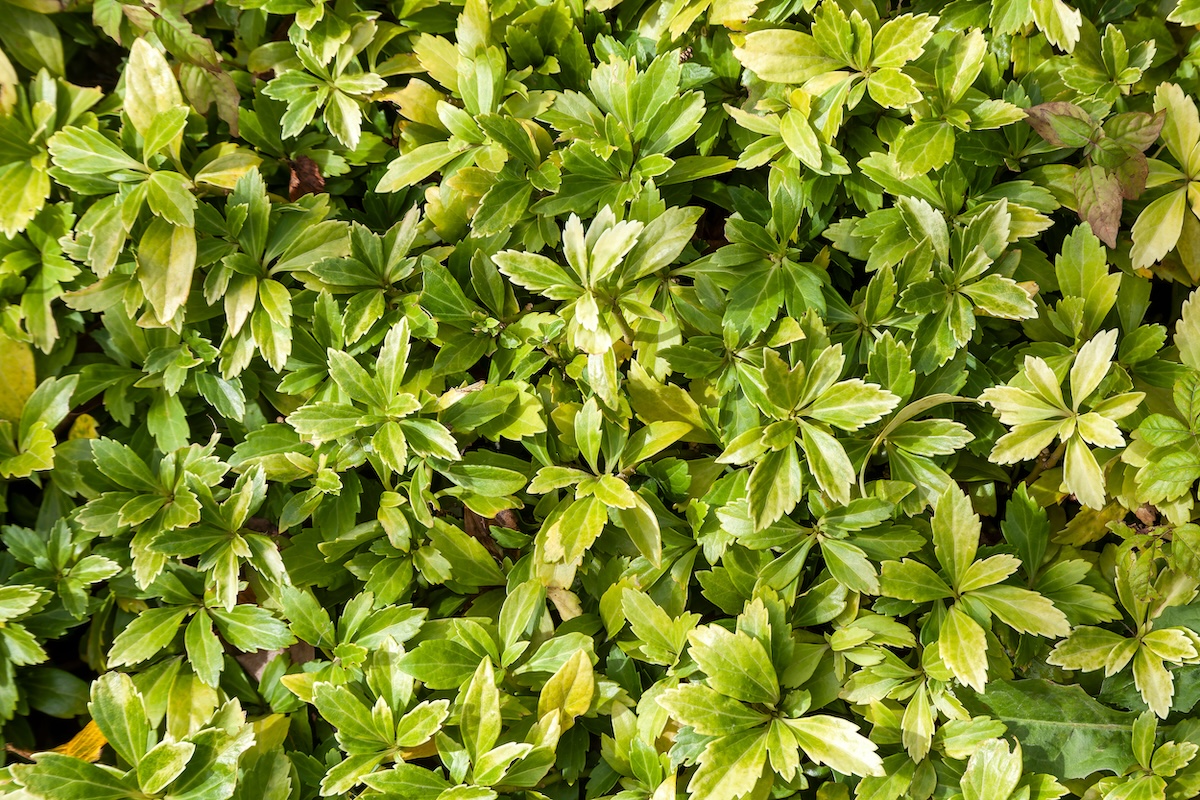
Japanese spurge quickly forms a glossy, broadleaf evergreen carpet that controls soil erosion in shady areas. It spreads well beneath trees but does not climb, and produces a subtle display of creamy white flowers in early summer. Plant this ground cover at 6- to 8-inch intervals for coverage within a growing season. Note that pachysandra can be invasive, especially in areas of the Northeast and Upper Midwest.
Hardiness Zones: 4 to 9
Size: ½ to 1 foot tall, with 1 foot spread
5. Ostrich Fern (Matteuccia struthiopteris)
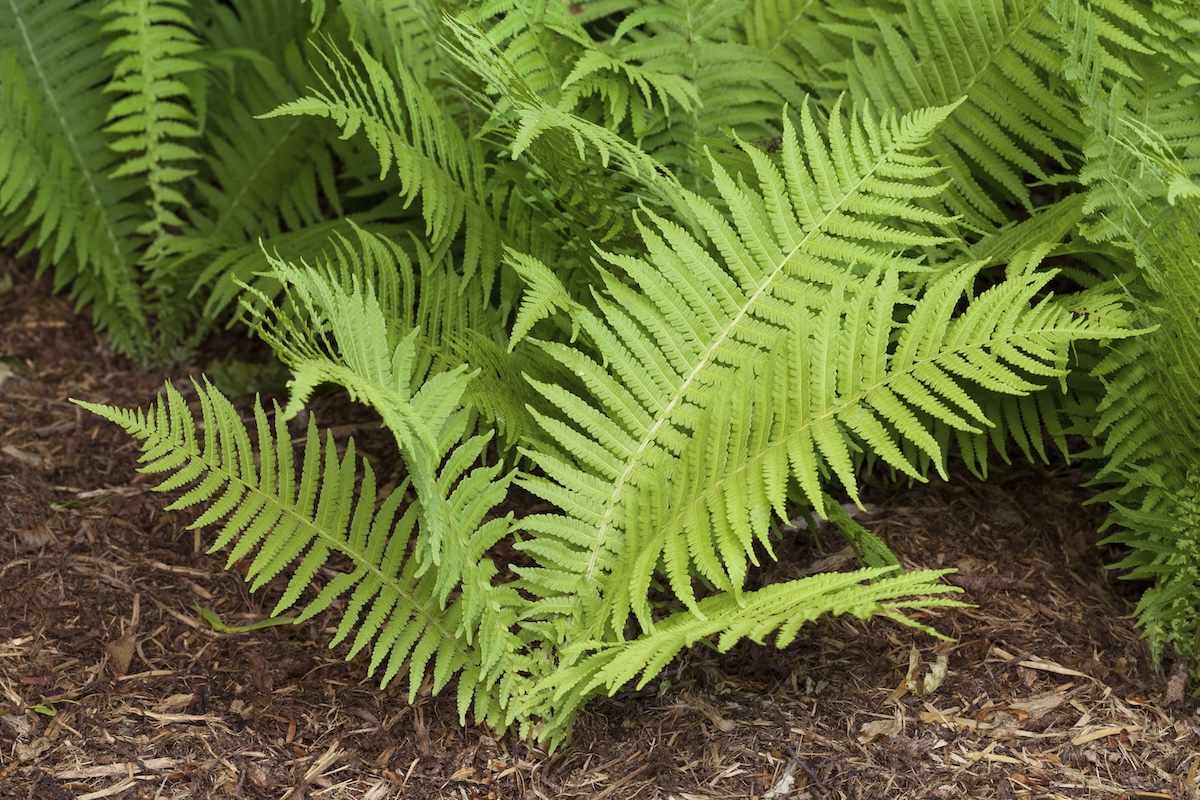
Beautiful and robust ostrich fern is a great erosion control plant for graded areas with low light and plenty of moisture. Roots spread quickly to cover bare, shady slopes with elegant 3-foot-tall vase-shaped plants. It’s an excellent option for rain gardens and sloped areas, since it spreads via deep rhizomes. A bonus is that deer and rabbits won’t eat it. Space plants 3 feet apart for quick slope coverage.
Hardiness Zones: 3 to 7
Size: 3 to 6 feet tall and 5 to 8 feet wide
6. Shrubby St. John’s Wort (Hypericum prolificum)
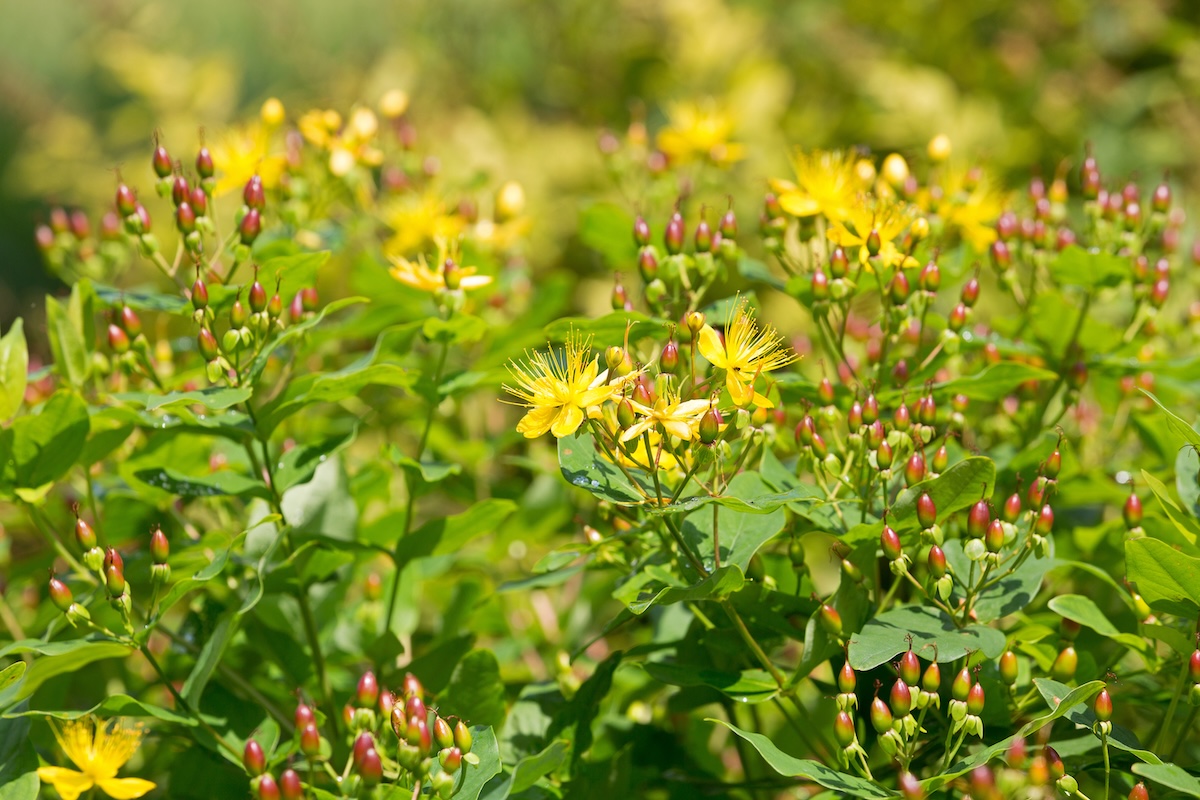
Native to eastern North America, where it grows naturally in sandy open woods and meadows, shrubby St. John’s wort is widely adaptable to different soil conditions but does consistently well on wet slopes or where periodic flooding occurs. Its taproots grow deep, and it produces lateral roots that help bind soil. Plant shrubby St. John’s wort in full sun to partial shade, 3 feet apart. The plant matures to a mound shape with glossy blue-green foliage and showy yellow flowers.
Hardiness Zones: 3 to 8
Size: 1 to 5 feet tall and 1 to 4 feet wide
7. Creeping Plum Yew (Cephalotaxus harringtonia ‘Prostrata’)
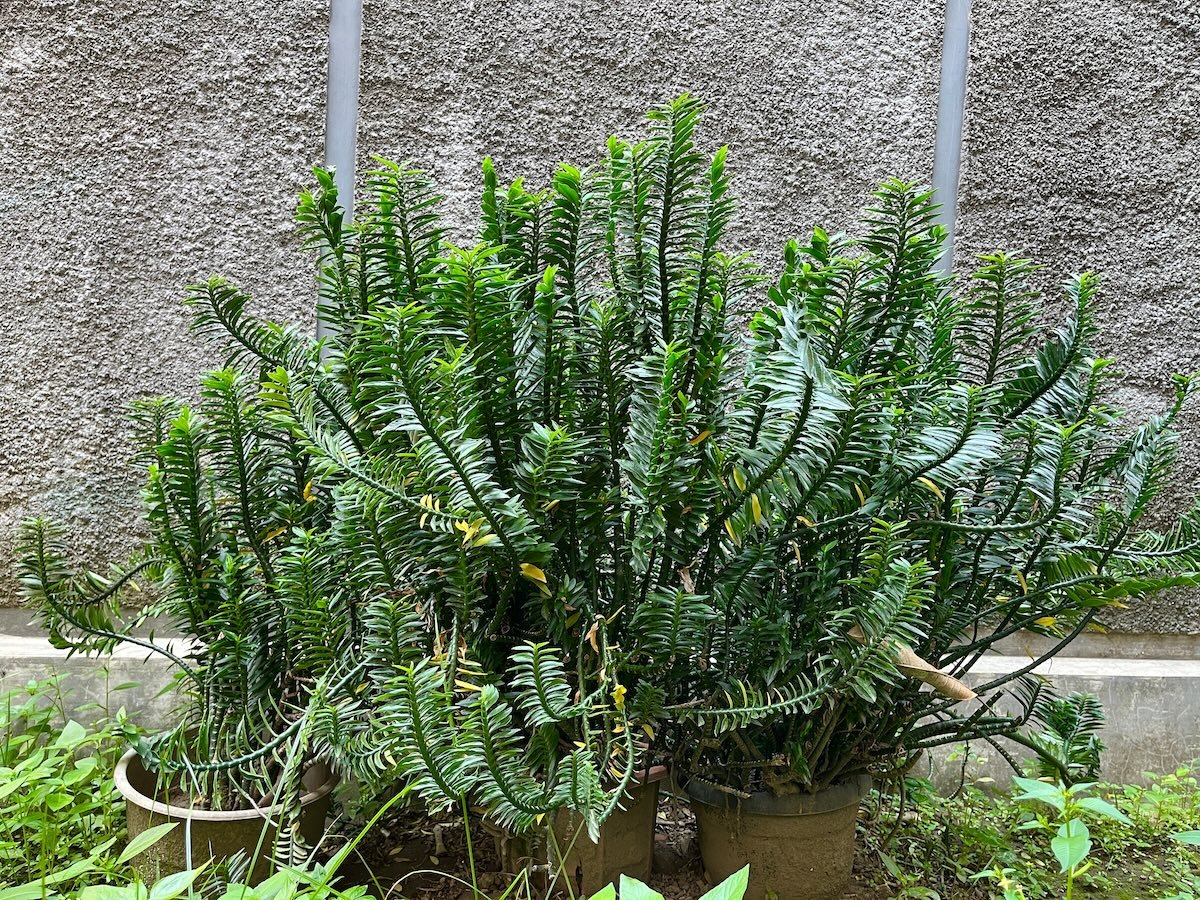
Creeping plum yew is one of a few shade-tolerant conifers. This low, spreading evergreen shrub reaches its mature size in just one or two seasons and offers year-round color and coverage. Its dense growth beautifully fills slopes with a solid mass of glossy, deep green fern-like foliage. It’s also an easy-care and deer-resistant plant. Yews are poisonous if ingested, but not to touch.
Hardiness Zones: 6 to 9
Size: 2 to 6 feet tall and wide
8. Creeping Phlox (Phlox subulata)
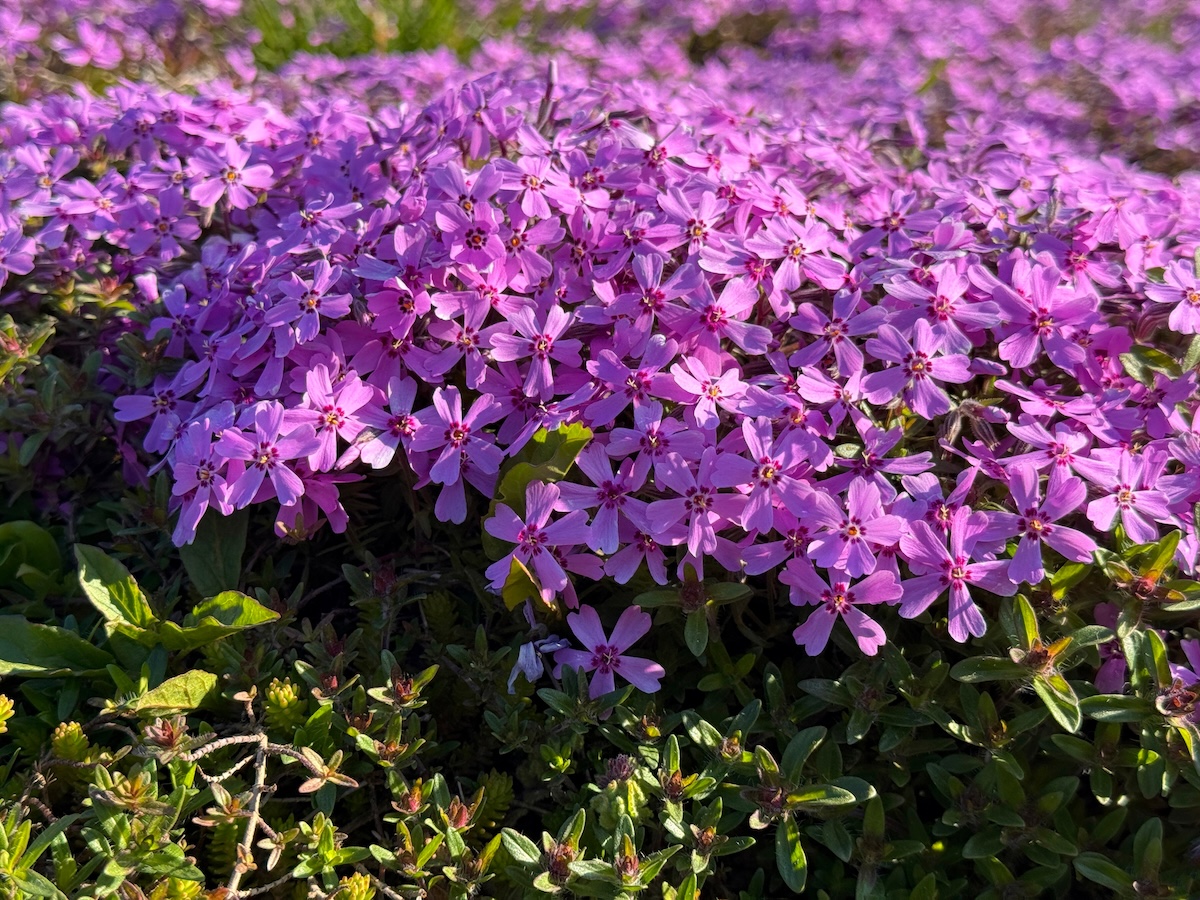
Many slopes are exposed to at least 6 hours of sun a day. For these areas, creeping phlox offers a carpet of pink, purple, red, or white flowers each spring. One of the showiest plants for erosion control, this hardy perennial beautifies steep banks for many years, arming them against erosion. It forms a low, dense mat, spreads at a moderate pace, and requires little care to remain durable. Space plants 12 inches apart for complete coverage within a season.
Hardiness Zones: 3 to 9
Size: ½ foot tall and 2 to 3 feet wide
9. Muhly Grass (Muhlenbergia capillaris)
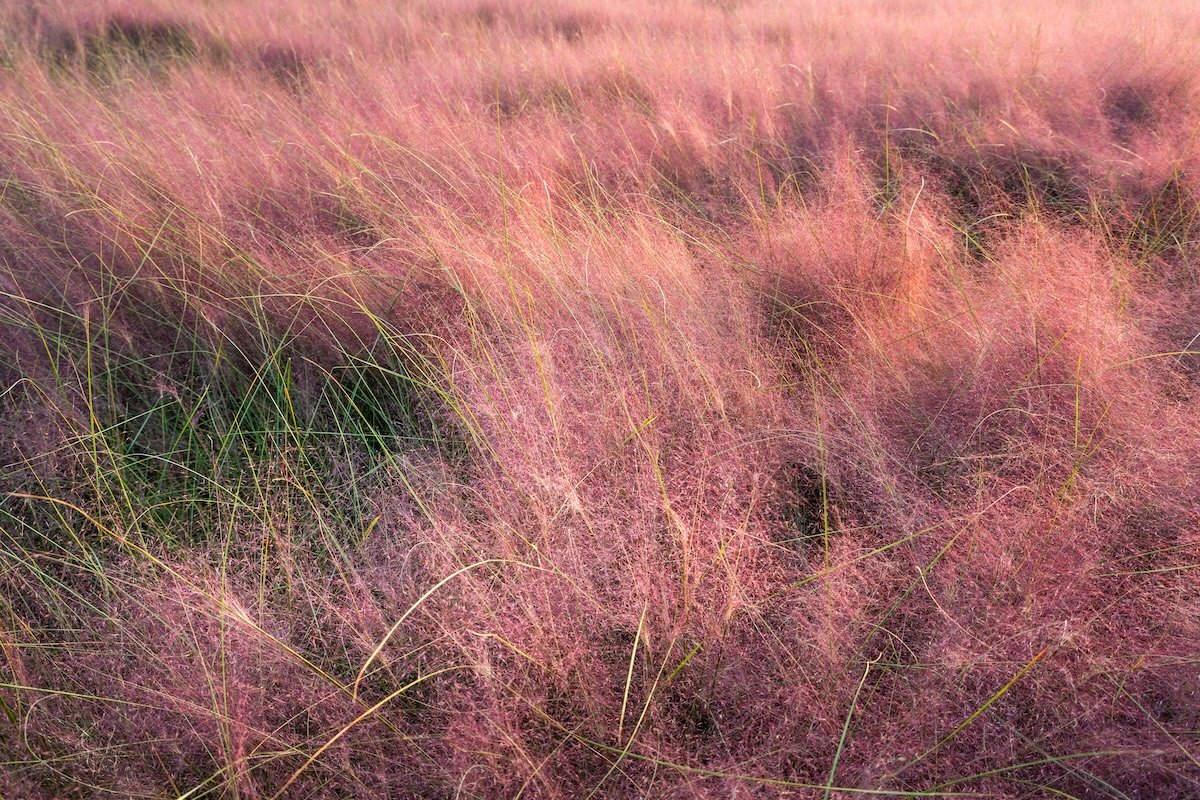
Ornamental grasses feature extensive fibrous roots, excellent drought tolerance, and lush foliage. Muhly grass, a widely distributed native North American perennial grass, has a wide-spreading root system that helps it withstand erosion. In late summer through fall, it boasts beautiful pinkish spikes that rise above the foliage. In winter dormancy, its bronze foliage adds structure and motion to a sloped landscape. Muhly grass grows well in full sun or partial shade, and the only care it needs is to be cut back in early spring to make room for new foliage.
Hardiness Zones: 5 to 11
Size: 2 to 3 feet tall and wide
10. Cotoneaster (Cotoneaster spp.)
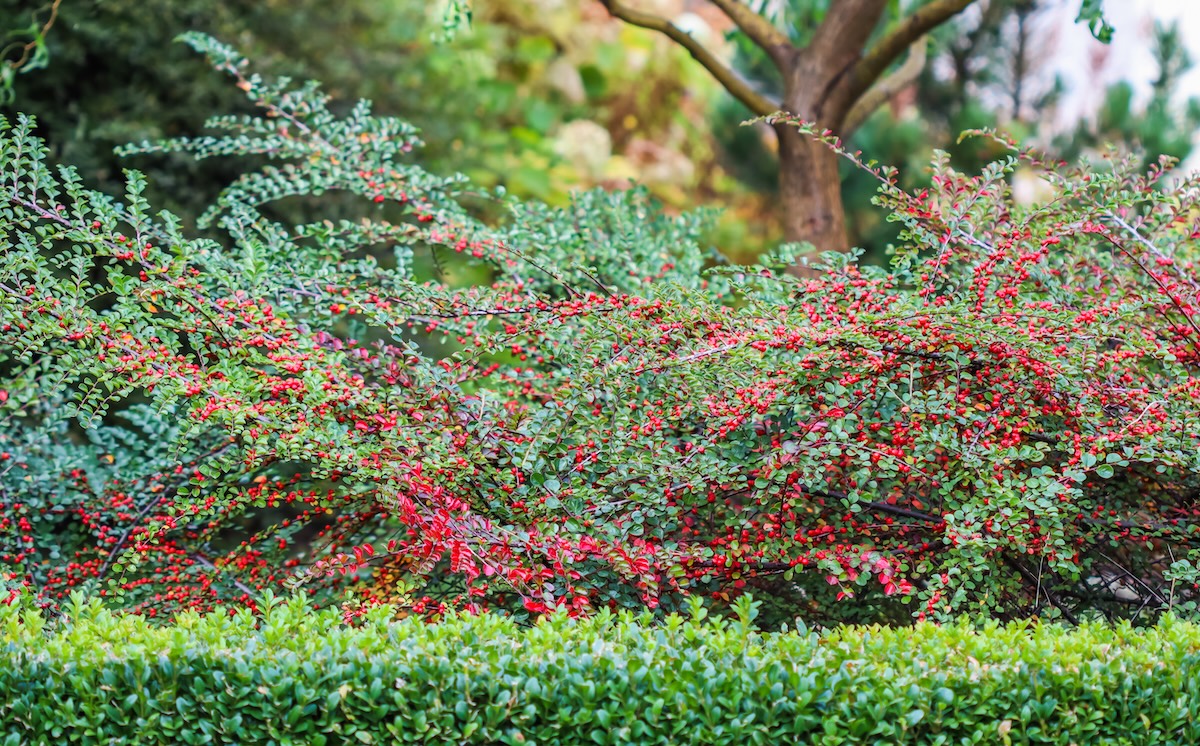
Cotoneaster protects sunny slopes while offering year-round visual interest. In spring, tiny white flowers appear amid its glossy green foliage, eventually yielding to red berries, making this shrub ideal for pollinators and birds. Nearly all low-growing species offer erosion control, especially when planted in mass; some favorites are Rockspray, Willow Leaf, and Bearberry. Branches grow roots where they touch the soil, adding even more soil protection. Space plants 5 to 6 feet apart, depending on the specific species’ mature spread.
Hardiness Zones: 5 to 8
Size: 1 to 2 feet tall and 5 to 8 feet wide

Meet the 2025 Tools of the Year