
Vacationer Goes Viral Sharing How She Survived 2004 Tsunami (Exclusive)

:max_bytes(150000):strip_icc():format(jpeg)/Meghan-McTavish-082625-4-bb89cee5d38b48918f4508b3de570d53.jpg)
NEED TO KNOW
- Content creator Meghan McTavish is recalling how she and her family survived the 2004 Indian Ocean earthquake and tsunami
- She tells PEOPLE that the recent alerts in Hawaii made her look back on her own harrowing experience
- “You kind of imagine a tsunami will come in like a roar and be loud, but it was very eerily calm. Just steady and relentless,” she said
When content creator Meghan McTavish saw recent tsunami alerts in Hawaii, it struck a chord — bringing back memories she thought she’d long buried.
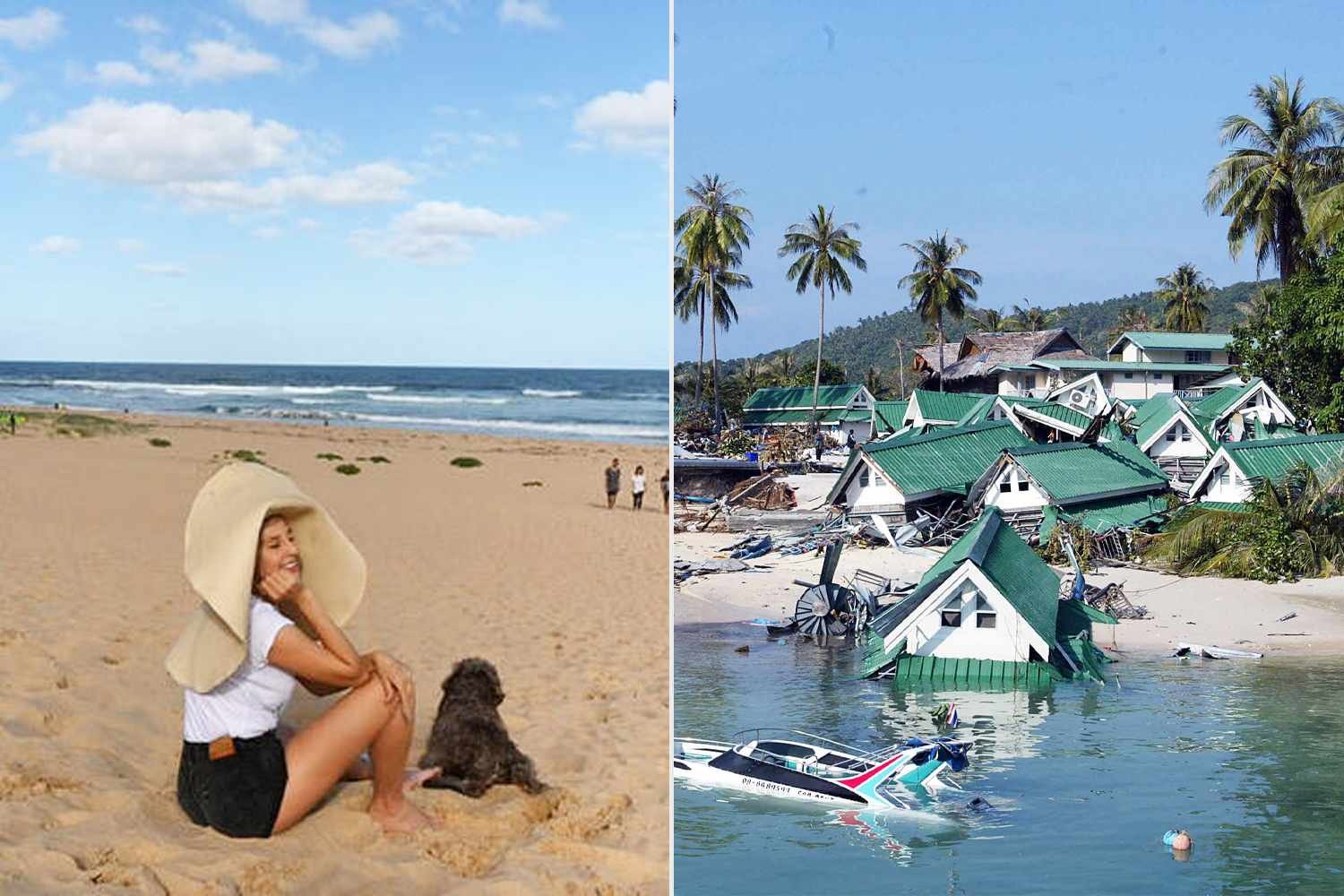
The 40-year-old Gold Coast, Australia, resident was suddenly flooded with vivid recollections of Christmas 2004, when she and her family were vacationing in Thailand during the Indian Ocean earthquake and tsunami, which killed over 5,000 people and left over 3,000 missing in that country alone, according to the Asian Disaster Reduction Center.
At just 19, McTavish was staying in Kata Beach with her family and boyfriend. They had booked a 10-day stay at a beachfront resort, but when they arrived to check in, their reservation was nowhere to be found.
Panic quickly set in. It was Christmas time, and finding another place to stay seemed nearly impossible. Eventually, they secured a spot on a nearby hill — elevated but still close to the beach. With no other options, they accepted it.
“We’d been there about a week and developed a bit of a routine: wake up, breakfast, snorkel, lunch, snorkel, etc. Every day was pretty much the same,” McTavish tells PEOPLE exclusively, adding that “Thailand is truly like no other place on earth. It’s such a mix of wild adventure, luxe travel, beautiful local restaurants, and a party atmosphere — if that’s what you want. You can get as involved or stay as out of touch with the world as you like. I love it there.”
Then came the morning of Dec. 26, 2004 — a day that would change everything.
After a night of celebrating and a few drinks, McTavish and her family decided to sleep in and see if they felt well enough to snorkel later. But just as they were talking about heading down to the beach, her dad walked in and said, “Hey guys, go on your balcony and look at the beach. The water is gone.”
The sight was surreal. McTavish recalls it looked like someone had pulled “the plug” on the ocean — the water was nowhere to be seen. “It’s crazy to think now because we all know so much about tsunamis because of this tragedy. But at the same time, most of us knew absolutely nothing about what to look out for,” she says. “We just thought it was a weird kind of cool phenomenon.”
“You kind of imagine a tsunami will come in like a roar and be loud, but it was very eerily calm. Just steady and relentless,” she adds.
Never miss a story — sign up for PEOPLE’s free daily newsletter to stay up-to-date on the best of what PEOPLE has to offer, from celebrity news to compelling human interest stories.
Meghan McTavish
Fortunately, McTavish’s dad — an experienced sailor — suspected this was a “king tide,” which the National Ocean Service defines as a a term used to described exceptionally high tides that are a result of the ocean being pulled back by the gravitational pull of the moon as sun. Although he wasn’t certain, he immediately forbade them from going to the beach.
But heartbreak followed: despite their caution, they saw others — including children — venturing out, following the receding waves and picking up shells from the exposed sea floor.
“I’m almost crying typing this because, in hindsight, you know what happened to those people next,” McTavish says. “It’s something I feel so guilty about but, like I said, nobody knew for sure.”
McTavish remembers chaos as hotel staff rushed to assist those closer to the beach. She had one eye on the water and one on the news. However, back then, without social media or reliable Wi-Fi, and with overwhelmed phone lines, they didn’t learn the full scale of the disaster until much later.
“Where we were staying in Kata Beach actually has a little island that ‘protected’ the beach somewhat,” she explains. “So there wasn’t a huge, crashing ‘wave’ as you might picture. Instead, it was like a tidal surge — steady, moving, but it just did not stop.”
“I remember every hotel group had their chefs making rice and noodles and handing them out on the streets to people helping with the clean-up,” she adds. “It was really heartening to see them support the community.”
ROSLAN RAHMAN/AFP via Getty
Though she didn’t fully realize it at the time, McTavish believes this trauma shaped her deeply.
It sparked her passion for helping others process difficult experiences. It’s why she invented The Plotline© journal — a narrative therapy-based method that helps people reframe their lives like a movie, with themselves as the main character, empowering them to channel strength when times get hard.
Recently, she also shared her story on TikTok. Initially nervous to open up, she found the process incredibly healing. The video also went viral, amassing 4.7 million views and nearly 3,000 comments.
“So many people have shared their own stories of ’near-misses’ and lucky breaks from disaster,” she tells PEOPLE. “I’ve also had people who lost family and friends in the tsunami reach out and thanked me for bringing the story to light. I am so honored that they appreciated it.”
“I think the reason my story went so viral was because of the almost ‘mundane’ elements of it,” she adds. “Back then, we didn’t have as much connectivity and relied heavily on cable news. We devoured every piece of information and didn’t change our flights home because we knew people desperately needed to return to loved ones, and we didn’t want to take their seats. So we camped out in limbo, unsure what to do.”
David Alexander/Getty
What’s your sign? Subscribe to our free newsletter to get your unique weekly horoscope delivered straight to your inbox.
Although her family made it out safe, guilt lingered over the years. McTavish admits that had they been at their original hotel or snorkeling as usual, they likely wouldn’t have survived.
“It just goes to show we’re all just a stroke of luck away from disaster, and we need to be grateful for everything, even the bad things, because you don’t know if they are the thing that saved you from something worse,” she says.
McTavish also shares a powerful reminder: “You’re not alone. You have more in common with other people than you think, and most people are just better at ‘covering’ their trauma tracks. That’s why re-writing the story of the traumatic things that happened to you can help. So instead of being a victim, you can switch the story to being proud of yourself for overcoming it — and suddenly you’re a superhero.”