
7 Mistakes You Are Making With Your Hummingbird Feeder

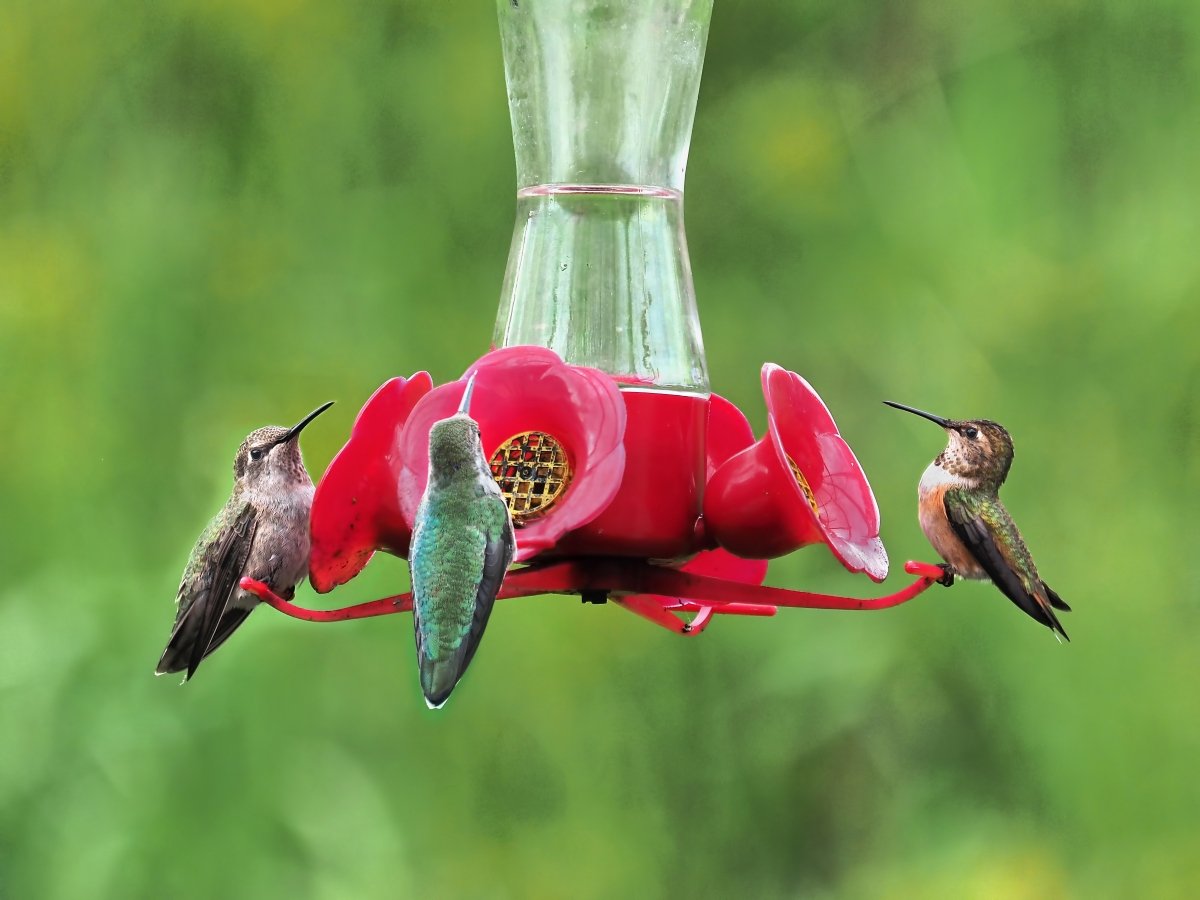
If you live in the eastern half of the United States, ruby-throated hummingbirds may be paying you a visit this springtime. For those living in the west, varieties such as black-chinned, Costa’s, Allen’s, rufous, and Anna’s hummingbirds could migrate through your yard. Either way, if you’re lucky enough to live in an area frequented by hummingbirds, you might enjoy encouraging a close-up visit by hanging hummingbird feeders in your garden. These tiny birds need to consume an astonishing amount of daily calories to fuel their incredibly fast metabolisms. In fact, hummingbirds have the highest metabolic rates of any animal on earth.
While hummingbirds do eat tiny insects, sap, and pollen, the majority of their diet is the sugary nectar secreted by flowers that depend on them and other pollinators, like butterflies and bees, for seed propagation. You can attract hummingbirds to your garden by planting their favorite flowers, which include lantana, zinnia, salvia, flowering tobacco, petunia, and foxglove, to name a few. But, for a real show, it’s hard to beat the appeal of a hummingbird feeder hung where you can easily observe it from a nearby window or garden bench.
Here’s what you need to know about hanging and maintaining your feeders to attract hummingbirds.
1. You only have one hummingbird feeder.
It’s common for one hummingbird, usually a male, to claim a feeder as his own and aggressively chase away all other would-be visitors. While it’s entertaining to watch the birds’ aerial hijinks, chances are you’d like to have as many hummers as possible visit your feeder. The solution is to hang at least two feeders (preferably more), spacing them at least 10 feet apart from each other. This way, the dominant bird can still defend his turf, but you’ll be able to enjoy other visiting hummingbirds as well.
2. Your feeder is crawling with ants and bees.
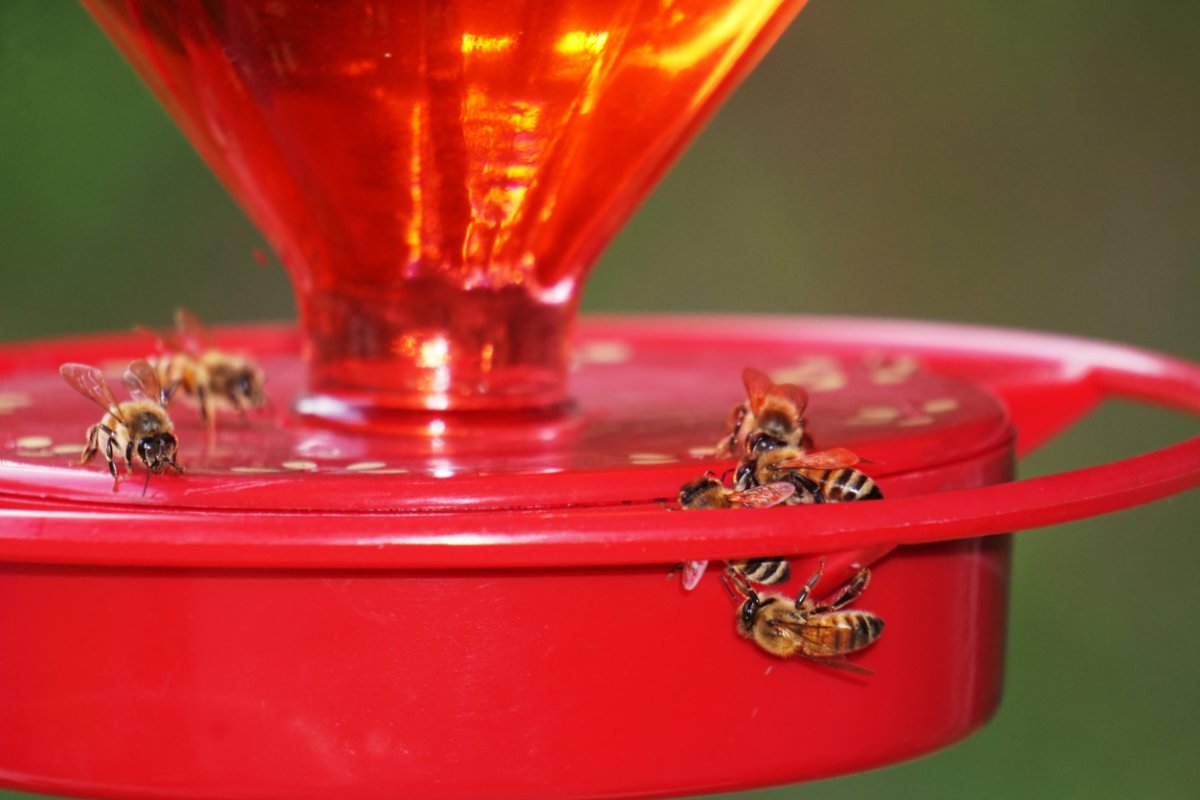
Ants, bees, and wasps all enjoy sugar water, just as hummingbirds do. One trick for keeping ants away is to hang your feeders with sturdy fishing line, which is difficult for ants to climb. You can also attach an ant moat, like the Hummers Galore hummingbird feeder insect guard, directly above the feeder. Once filled with water, ants cannot cross the moat to reach the nectar.
If you’re trying to keep bees out of your hummingbird feeders deter them by hanging saucer-shaped feeders rather than traditional bottle-shaped versions. Saucer feeders, like this hummingbird feeder from Juegoal, are easy for hummingbirds but difficult for insects to use, so you can enjoy watching feathered visitors without fearing a sting from a bee or wasp. Saucer feeders are far less prone to dripping than traditionally shaped vessels.
3. You don’t have a water source for the hummingbirds nearby.
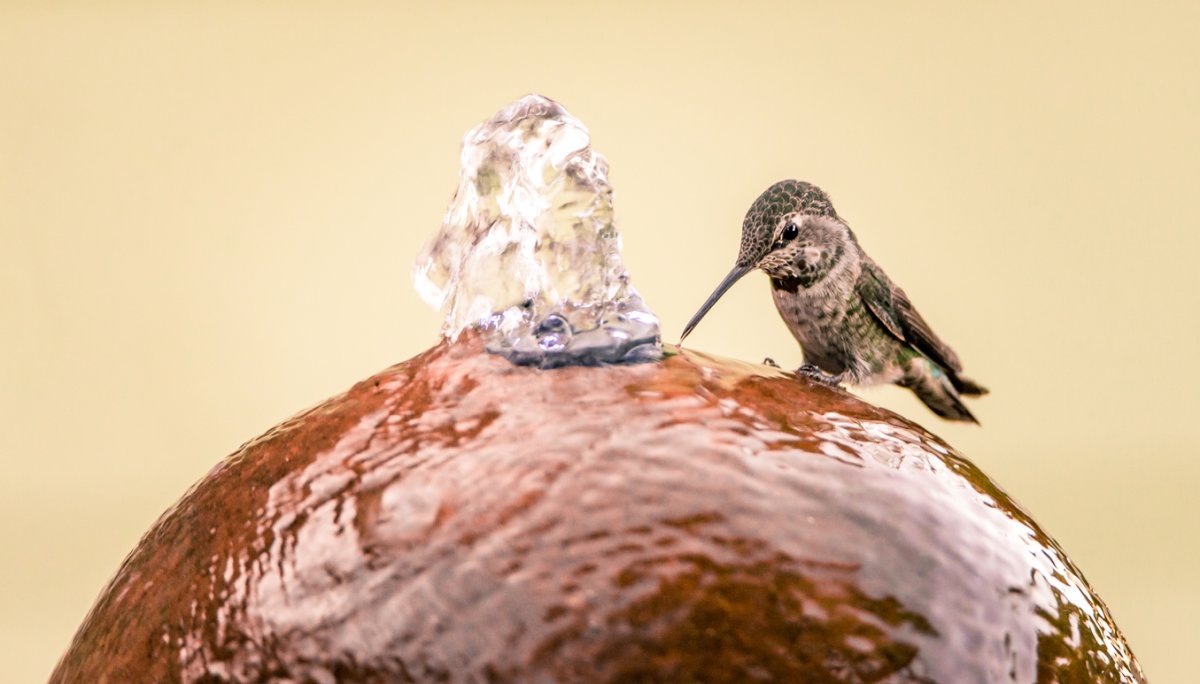
Although they don’t drink much water, as the nectar they sip provides enough to keep them hydrated, hummingbirds do need water for bathing, just like other birds. The splashing helps keep their feathers in good condition by washing away any sticky nectar residue that might have dripped while drinking. Bathing also helps remove pests and dust. Unlike many other backyard birds, hummingbirds rarely visit traditional birdbaths. What they love, however, is mist. To attract more hummers to your yard with a misting water feature, install a very shallow fountain with a solar-powered bubbler, like the AISITIN Solar Bird Bath Fountain, set to the finest spray. (For other top-quality options, see our researched guide to the best solar birdbath fountains.) Position the fountain so that it’s fairly close to the feeder, and also near a shrub or tree where the birds can perch while their feathers dry.
RELATED: The Best Bird Baths, Tested and Reviewed
4. The hummingbird feeder is dirty.
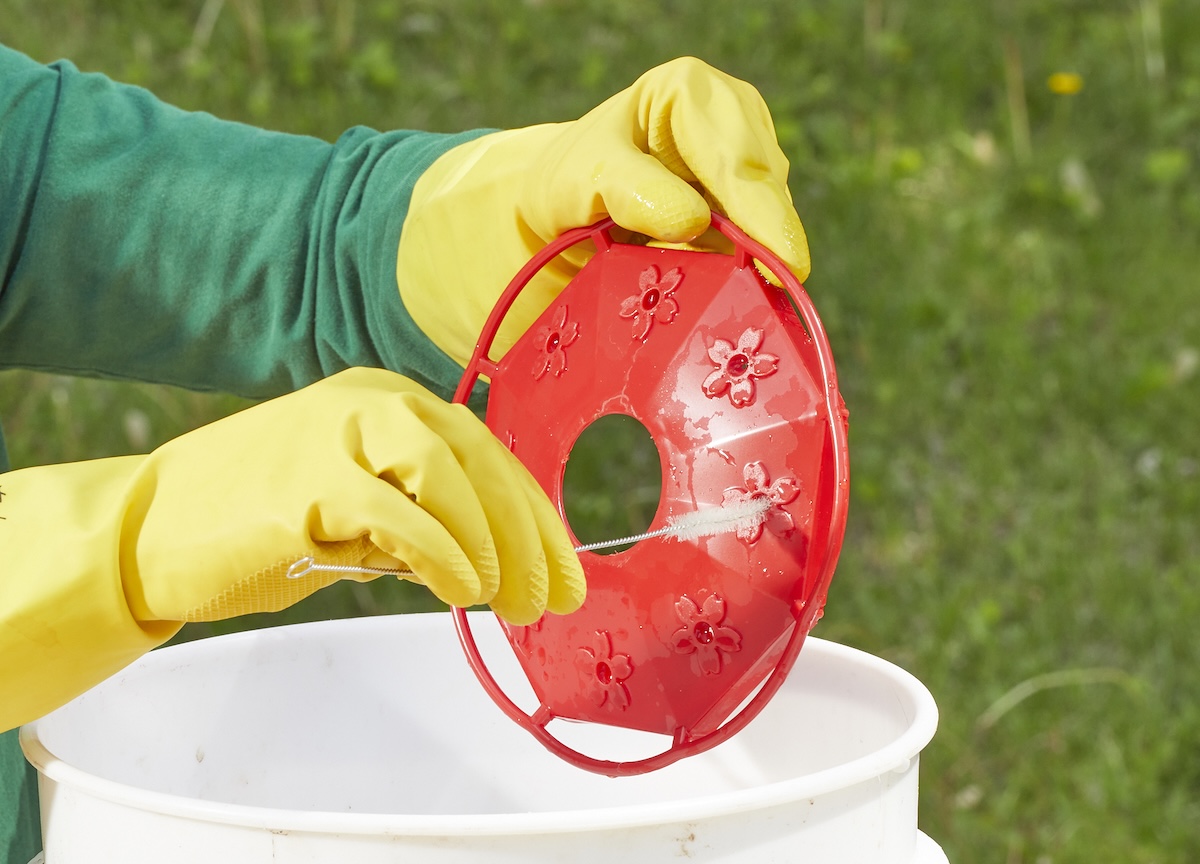
Mold and bacteria grow quickly in the sugary nectar that hummingbirds love, and both can sicken birds who sip spoiled fluid. For this reason it’s crucial to give your hummingbird feeders a thorough scrubbing at least once per week, more often when it’s hot.
Many hummingbird feeders are dishwasher-safe; if that’s the case with yours, wash them in the dishwasher regularly. If your model is hand-wash only, soak the disassembled feeder in soapy water, rinse thoroughly, and scrub away any mold or grunge with a bottle brush for the body of the feeder. Then, use an old toothbrush or pipe cleaner to scrub the ports and any other hard-to-reach spots. Rinse everything completely, and let all parts dry before reassembling your feeder, filling it with nectar, and hanging it back in your yard.
5. The nectar is spoiled.
Hummingbird food spoils quickly, particularly when the weather is warm. Because hummingbirds can get sick from drinking spoiled nectar, it’s important to change heir food regularly. At a minimum, replace the nectar twice per week during cool weather and every other day (or even daily) when temperatures are 80 degrees or hotter. You can also maintain nectar freshness by positioning your feeders away from direct sun. Choose a spot with dappled shade or a location that is shaded during the peak heat of the afternoon.
6. You’re using red nectar.
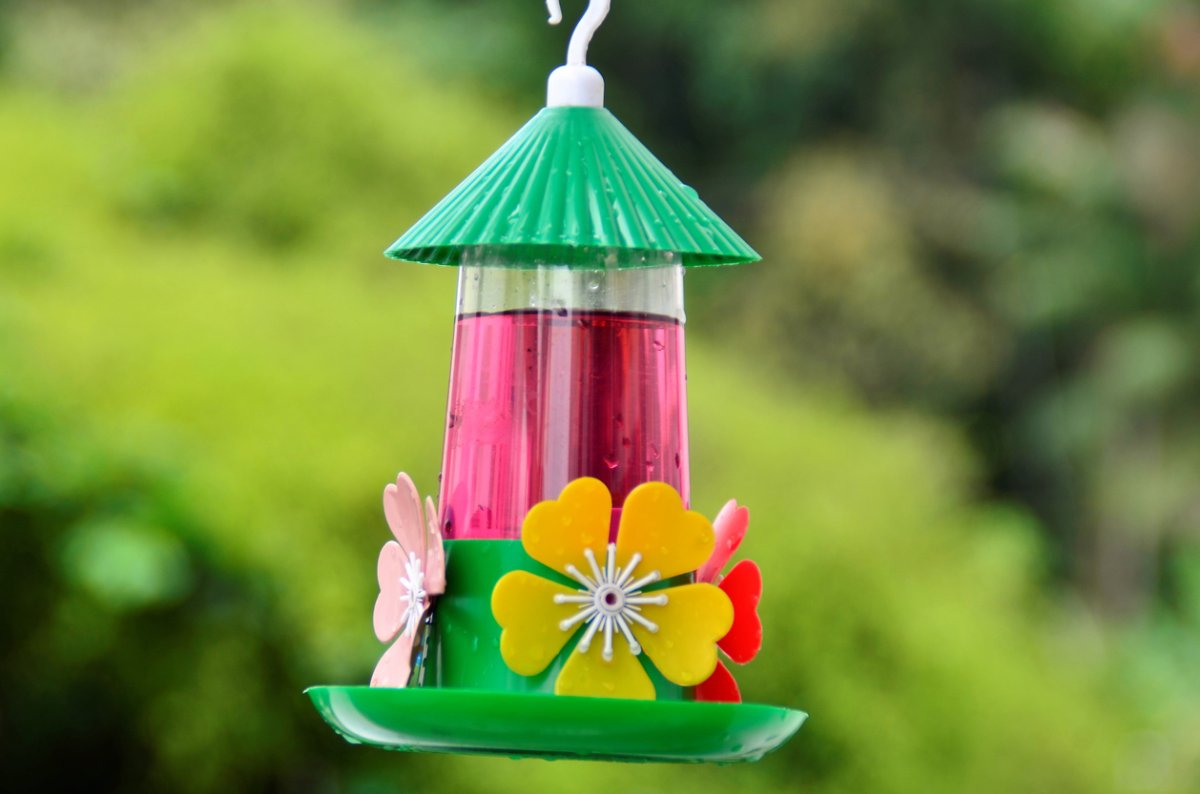
Hummingbirds are highly attracted to bright colors, particularly red, orange, pink, and purple. In fact, don’t be surprised to find a curious hummer hovering nearby to inspect you if you venture into the yard wearing a shirt in one of their favorite hues. However, it’s not true that hummers require red coloring in their nectar to find it. In fact, some wildlife experts feel red food coloring is possibly harmful to hummingbirds’ health. As long as the feeder itself is red and hung in a location easily sighted from above, the birds will spot it. So go ahead and fill the feeder with clear commercial hummingbird food, or mix your own. Remember this easy hummingbird food recipe: Mix 1 part white table sugar to 4 parts water.
RELATED: 30 Gorgeous Plants That Attract Hummingbirds to Your Garden
7. You take the hummingbird feeder down too soon.
In some areas of the west, especially in Southern California, hummingbirds stick around all year long. But in most of the country, hummingbirds only visit during the warmer months before making their way back down to South America for the winter. As a general rule, hang your feeders in mid-March if you live in the south or a mild-winter area and in early-to-mid April if you live in the north or anywhere with very cold winters.
It’s not true that leaving your feeders up will discourage the hummers from migrating in the fall, but there’s no point in leaving them in place if the birds are gone. A good rule of thumb is to take down hummingbird feeders 2 weeks after you’ve stopped seeing visitors. That’s generally in mid- to late October in the north, and early to mid-November for the south.
If you live in Southern California, or another area where hummers remain all year, it’s fine to keep your feeders up year-round.
All You Need to Care for Your Lawn & Garden