
25 Types of Sunflowers to Brighten Up Your Garden

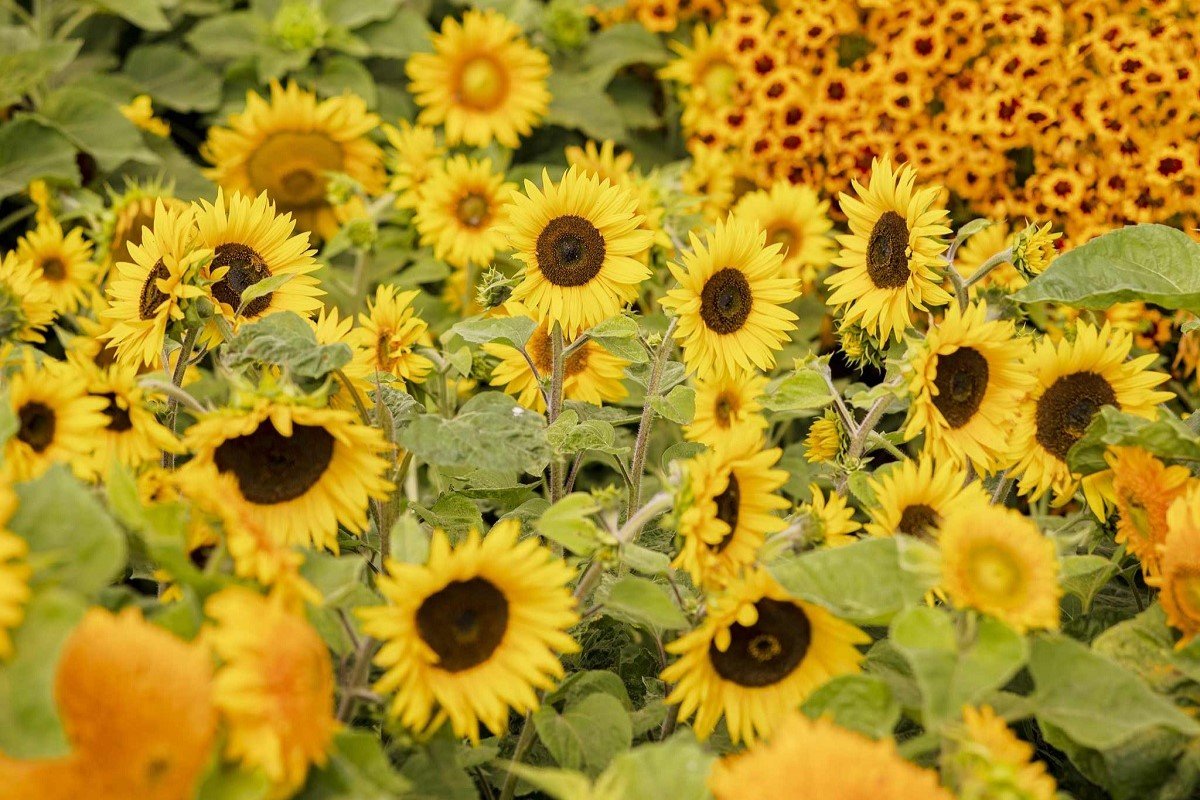
Sunflowers are sun devotees, as their beautiful blooms turn throughout the day to match the sun’s path. But their circadian rhythm is just one of sunflowers’ many charms. Versatile and bright, they are an inexpensive way to add a variety of color to your garden or summer flower arrangements.
Beyond the classic golden-yellow bloom, you can find different types of sunflowers in orange, red, and near white, as well as two-tone striated blooms. As a bonus, sunflowers are one of the easiest annual flowers to grow from seed, which offers beginning gardeners a simple entry into a new passion.
Plants to Place Near (or Away From) Sunflowers
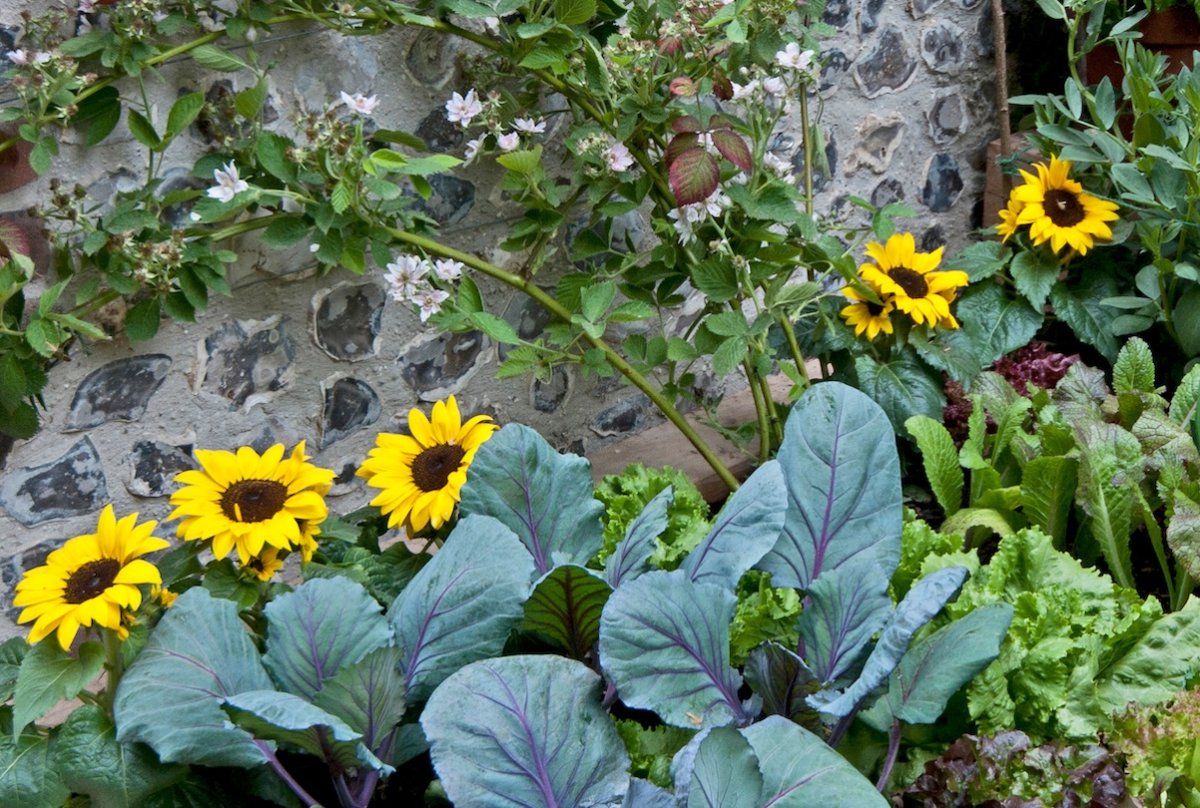
One caution with this easy-care garden flower is allelopathy. This means that sunflowers produce chemicals like phenolic compounds and terpenes that can stop seed germination in some surrounding plants. So, while it’s great to place sunflowers near a vegetable garden to attract pollinators and even shade some edible plants, avoid planting pole beans, lettuces, broccoli, kale, tomatoes, or potatoes nearby. Since the chemicals are in the roots, keep taller sunflower varieties further away than shorter ones. The chemicals also can affect grasses and the germination of some native wildflowers.
Create a barrier between sunflowers and plants sensitive to their compounds by growing a companion plant as a barrier. Herbs such as rosemary, thyme, and basil can grow between sunflowers and tomatoes, for example. Other companion plants with care needs similar to sunflowers are weigela shrubs, shasta daisies, or annual zinnias or snapdragons.
How to Choose Sunflower Varieties
“When choosing sunflowers, gardeners should first decide whether they want blooms for cutting or for pollinators,” says Nancy Trautz-Awot, horticulture specialist for Burpee in Westminster, Pennsylvania. For example, pollenless varieties are better to cut and bring indoors to fill a vase, since they don’t make a mess. They still offer some nectar for bees and butterflies, but won’t create seeds. Pollen-producing sunflowers produce plenty of seeds for birds and for reseeding the next year.
Aside from the pollen factor, look for the sunflower colors you prefer to complement nearby plants and structures, or choose the colors like the light yellow or deep red flowers just because you can’t resist them. Also consider size; tall varieties are best in the back of beds or along walls or fences, while dwarf varieties grow better in front or in containers. Some sunflower varieties produce a single giant sunflower only, and others branch out for more continuous but smaller blooms.
With so many options, it can be tough to choose. Consider our curated list of 20 annual sunflowers and five perennial sunflower varieties for your garden plans.
Annual Sunflowers
Most types of sunflowers are annuals (Helianthus annuus), which is the most common species. They last one growing season in most climates.
1. Kindergarten
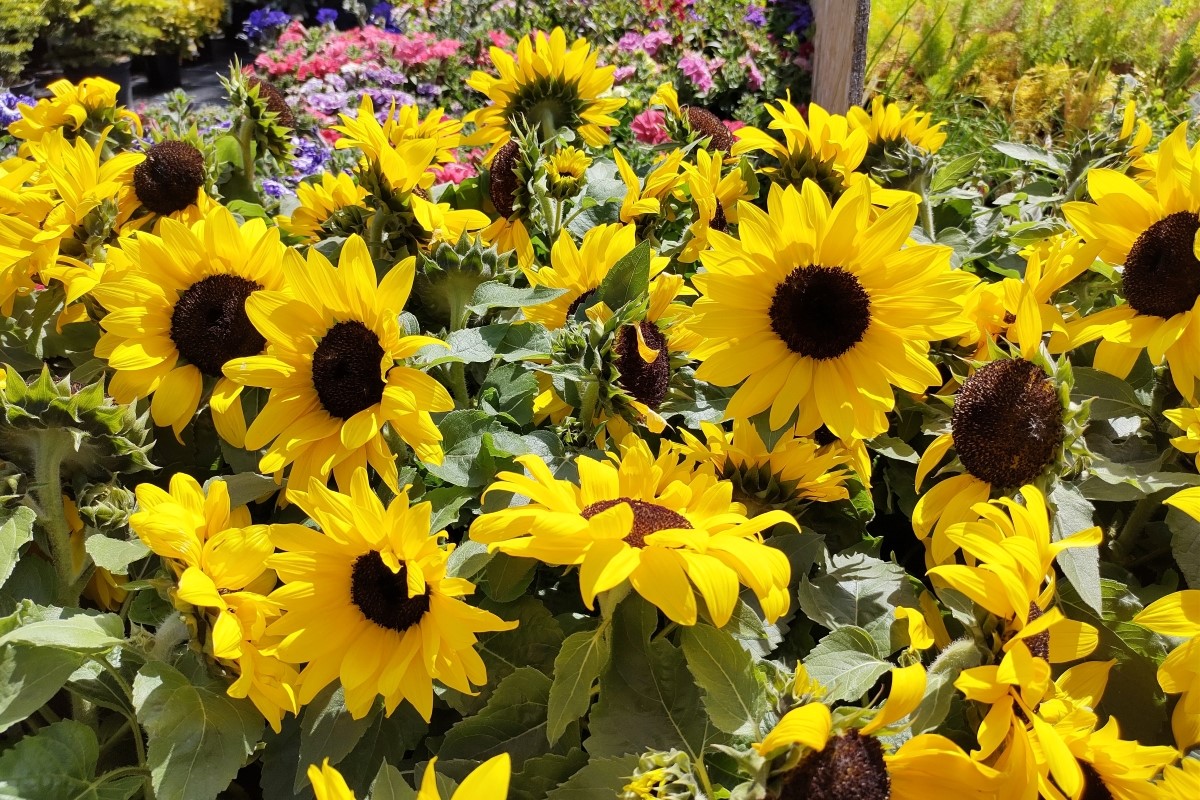
If you want to start small, then Kindergarten sunflower is the way to go. Trautz-Awot calls this “a tiny sunflower with big impact.” It reaches only about 10 inches tall but forms multiple branches up to 8 inches wide, so it produces its 3-inch blooms over a long period. Trautz-Awot says Kindergarten is “great for beds, borders, and containers, and an excellent choice for children’s gardens.” It’s also a good option for windowboxes.
Hardiness Zones: Annual in Zones 2 to 11
Buy Now: 50-pack of seeds at Burpee for $5.95
2. Mammoth
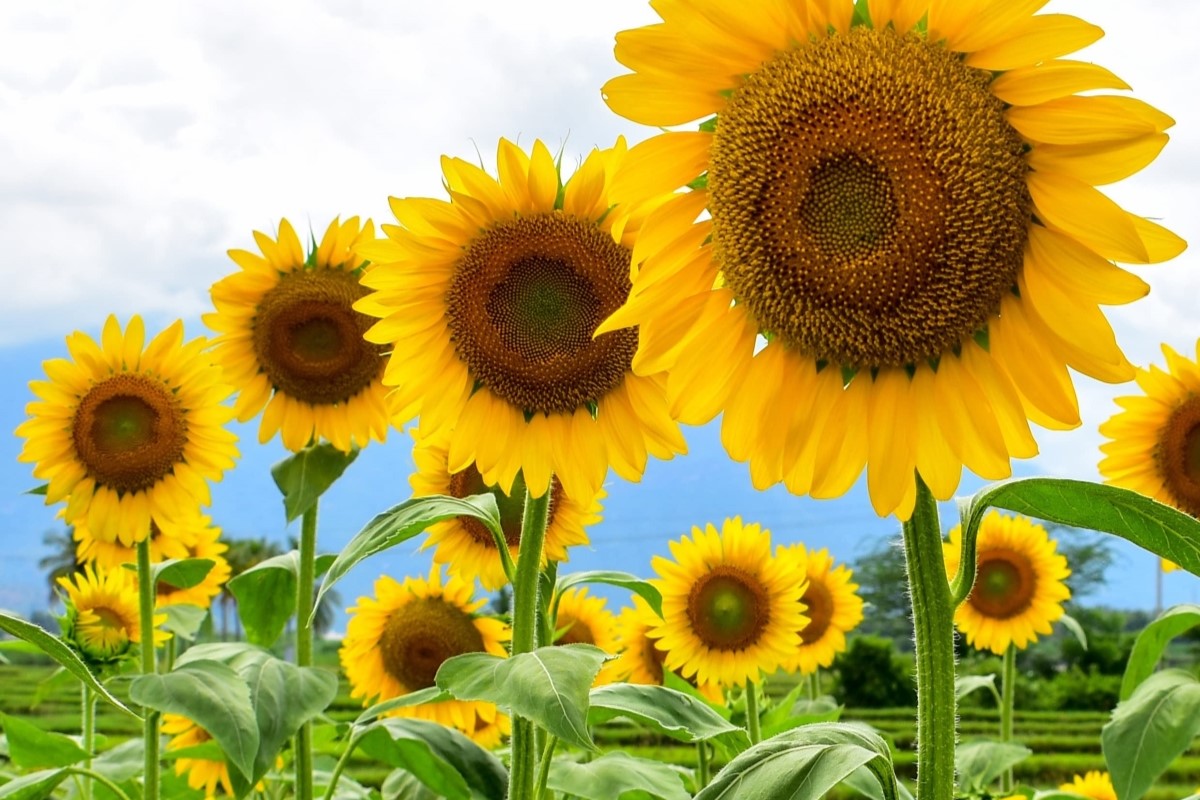
Mammoth sunflowers are heirloom sunflowers that tower above Kindergarten and many others. It’s a “classic tall variety with very large seed heads, excellent for height in the garden and edible seeds,” says Trautz-Awot. The giant sunflower grows rapidly to reach nearly 12 feet tall. Each plant produces a single 10- to 12-inch bright yellow flower. Plant it at the back of a garden bed behind other annual flowers or along a wall; just make sure that you and the birds can get to its striped seeds for snacking.
Hardiness Zones: Annual in Zones 2 to 11
Buy Now: 200-seed pack at Burpee for $5.45
3. Strawberry Blonde
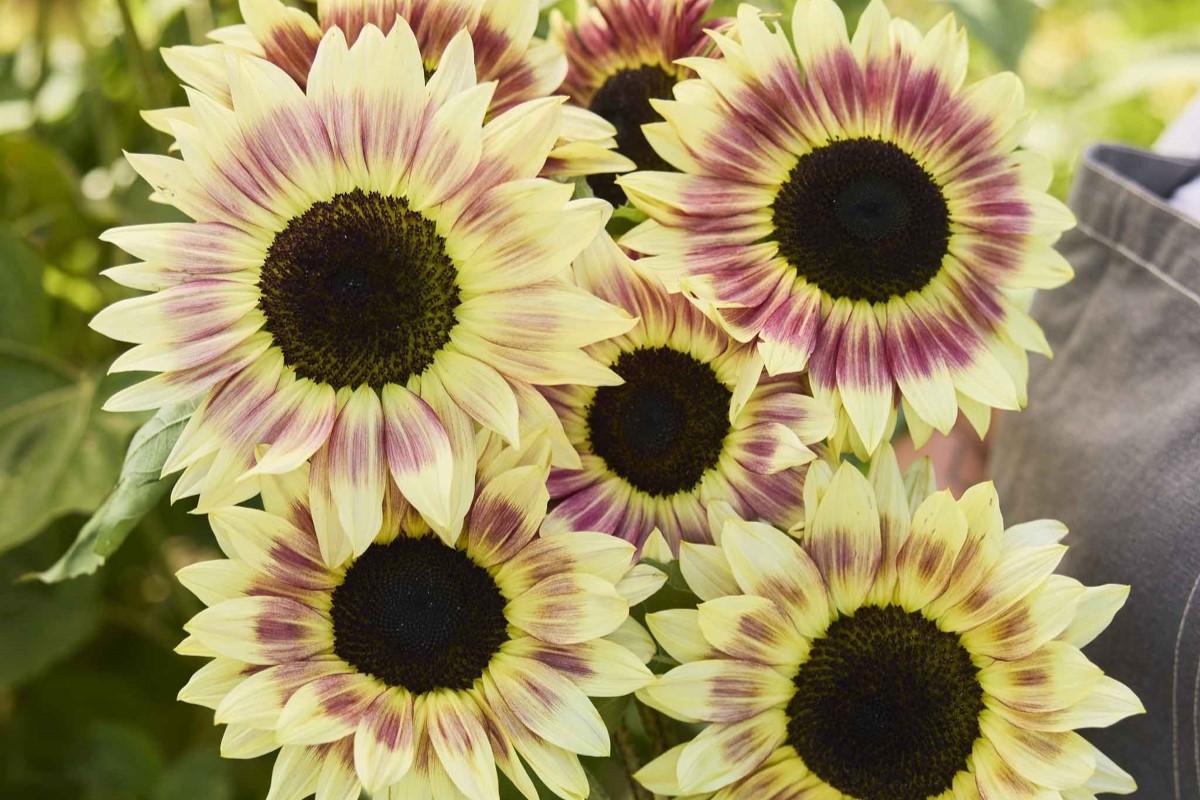
If you are looking for a pollenless sunflower, especially one to brighten up indoor arrangements, Strawberry Blonde is an excellent variety. Trautz-Awot describes it as having “unique rose-pink tones, valued for its ornamental appeal and soft garden color.” The nearly 5-inch flowers appear on numerous branches. Sow the seeds a few weeks apart for continuous summer blooms. The stalks will reach as high as 5 or 6 feet for a nice medium size.
Hardiness Zones: Annual in Zones 2 to 11
Buy Now: 20-Seed Packet at Pinetree Seeds for $3.05
4. Autumn Beauty
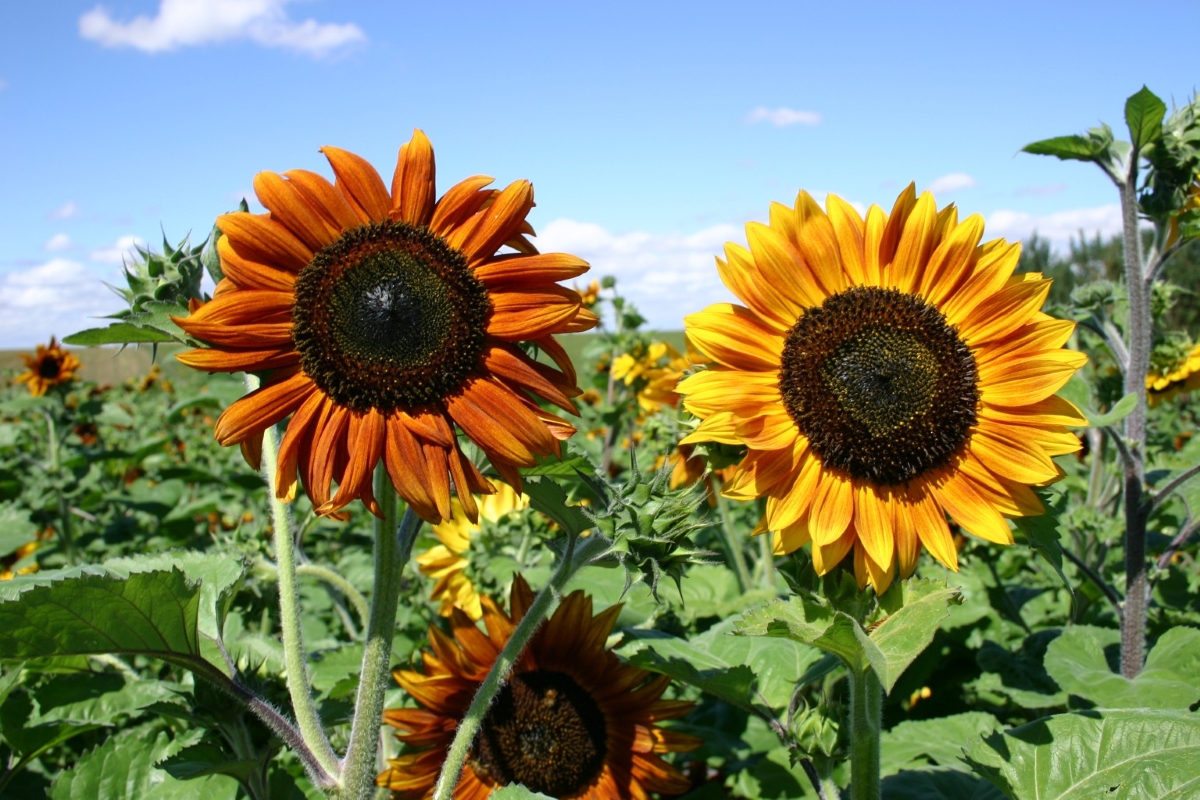
Bring in pollinators and a touch of fall color with Autumn Beauty. The sunflower grows to nearly 7 feet high and flowers within 70 to 100 days, so it reaches its peak in late summer and into early fall. The nearly 6-inch flowers feature a mix of warm reds, oranges, and yellows. It’s an open-pollinated variety and among the rare sunflowers. Once you find it, Autumn Beauty rewards you with color and gives late-arriving butterflies and hummingbirds plenty of nectar.
Hardiness Zones: Annual in Zones 2 to 11
Buy Now: 150-Seed Packet at Amazon for $4.99
5. Sunrich Gold
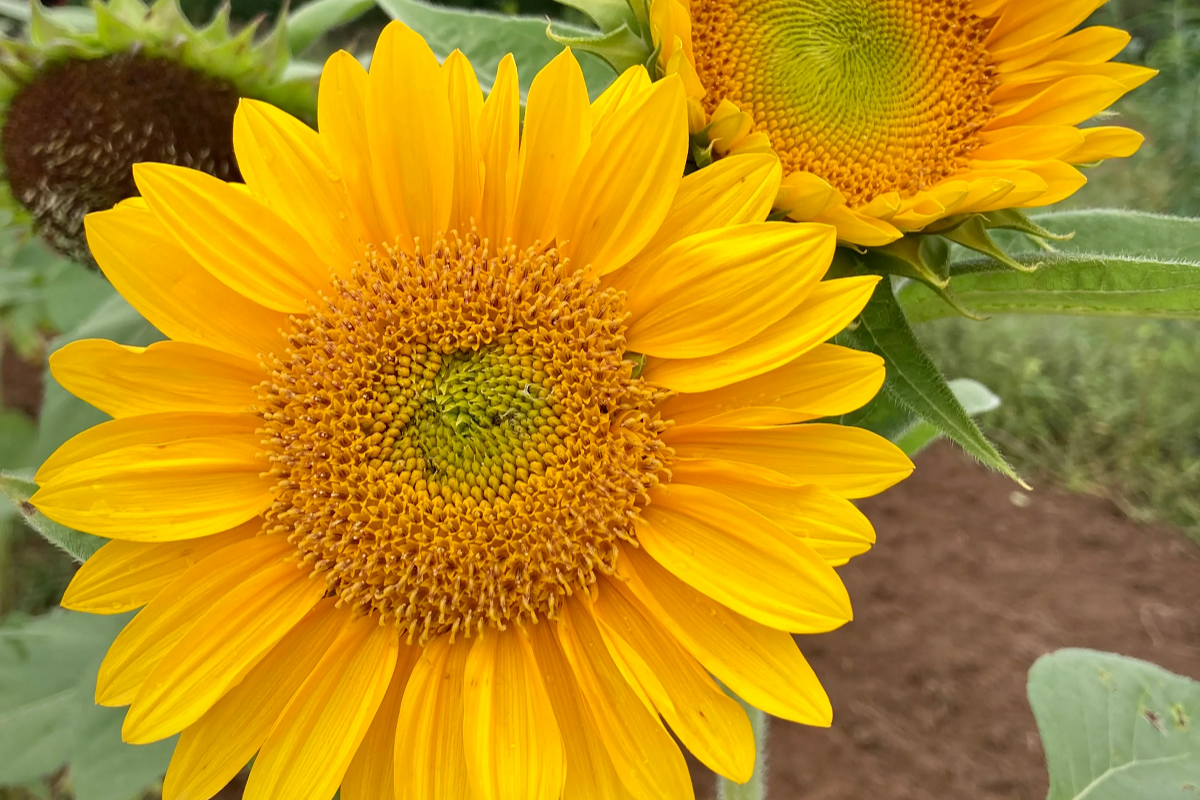
Sunrich Gold is another excellent cut flower, noted for being pollenless and for its tendency to produce uniform flowers about 4 to 6 inches wide. Each features a bright green disk in the center of the seed head. Only one flower appears per stem, so for continuous cutting, sow Sunrich Gold seeds a few weeks apart. The plant height is average to tall, about 5 to 6 feet. Like all annual sunflowers, Sunrich Gold is easy to start from seeds.
Hardiness Zones: Annual in Zones 2 to 11
Buy Now: 25-Seed Packet at Etsy merchant Silverlake Seed Company for $2.96
6. Teddy Bear
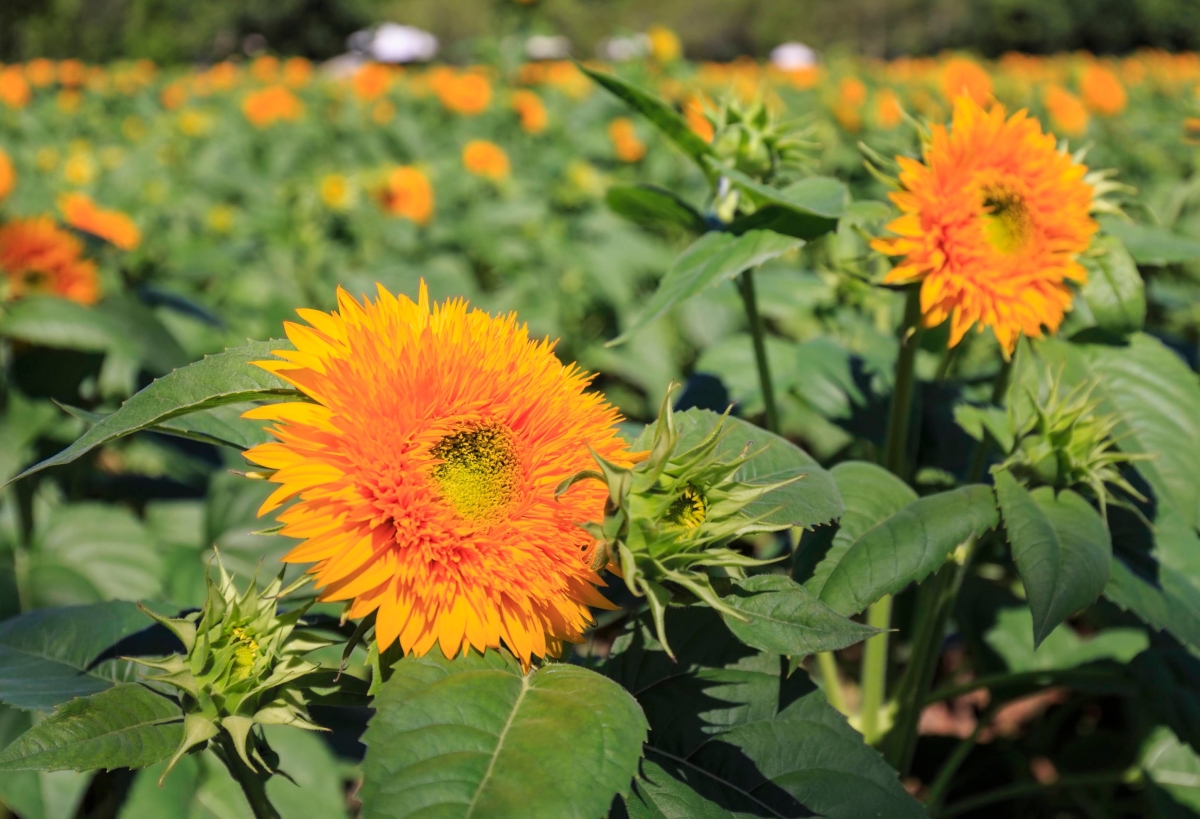
Trautz-Awot describes Teddy Bear Sunflower as “compact plants with fluffy, double golden blooms.” Double sunflowers grab attention with the full appearance of double the petals. The blooms look lush and last longer than typical sunflower blooms. Within 60 to 75 days, Teddy Bear also grows to a shorter height (2 to 3 feet) than some varieties. Trautz-Awot adds that Teddy Bear is “ideal for containers and small garden spaces.”
Hardiness Zones: Annual in Zones 2 to 11
Buy Now: 100-seed packet from Hudson Valley Seed Co. for $4.99
7. Ring of Fire
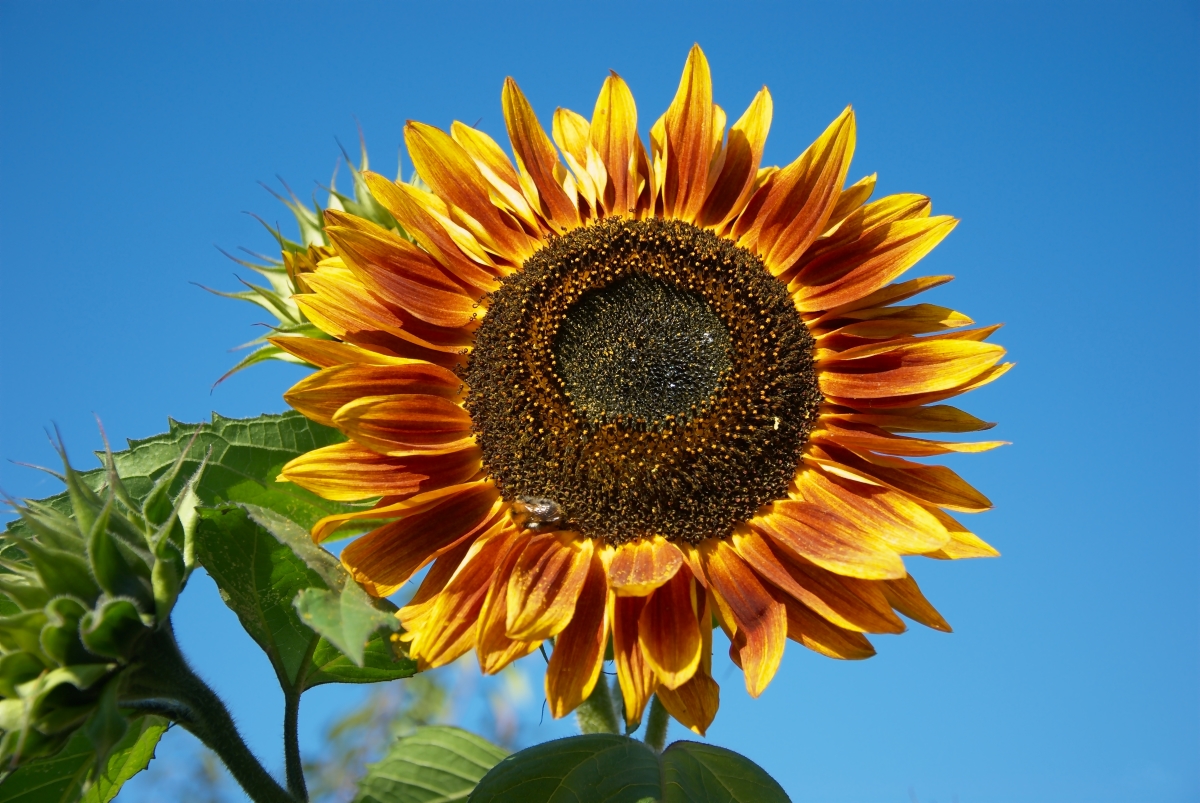
Ring of Fire stands out because each petal starts out deep red at the center, and changes to sunny yellow at the tips. The result is a ring around the chocolate brown center. This 2001 All-America Selection grows to 4 to 5 feet high, and the flowers appear later in summer than some sunflowers. You can cut the nearly 6-inch blooms to bring inside or leave some on the stalks to feed wildlife as fall approaches.
Hardiness Zones: Annual in Zones 2 to 11
Buy Now: 25 Seeds at Amazon for $4.75
8. Firecracker
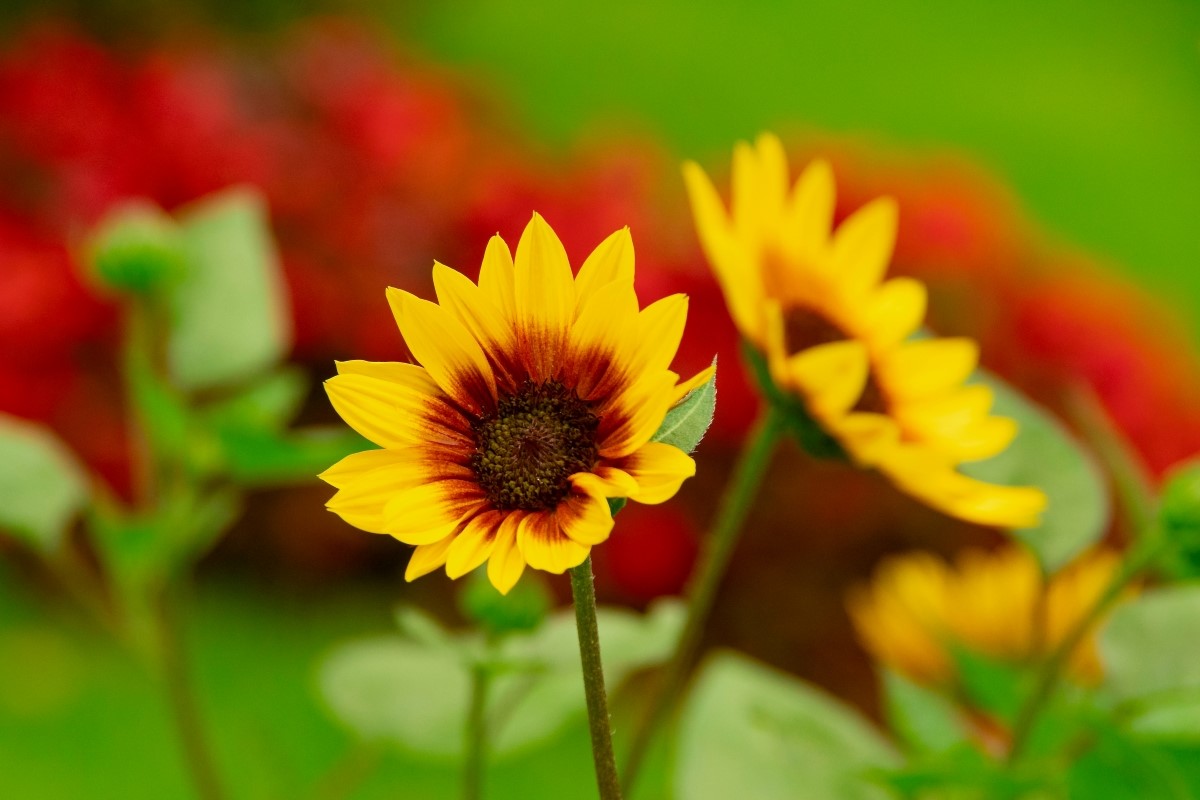
Gardeners can enjoy fiery colors in a dwarf size with the Firecracker Sunflower. The plant reaches no higher than 4 feet, and produces a mass of 4- to 6-inch flowers. The flowers are bicolored with deep orange and yellow, and are pollenless. Pick these flowers early, since the plant matures in only 50 to 60 days.
Hardiness Zones: Annual in Zones 2 to 11
Buy Now: 250 seeds at Johnny’s Seeds for $13.15
9. Moulin Rouge
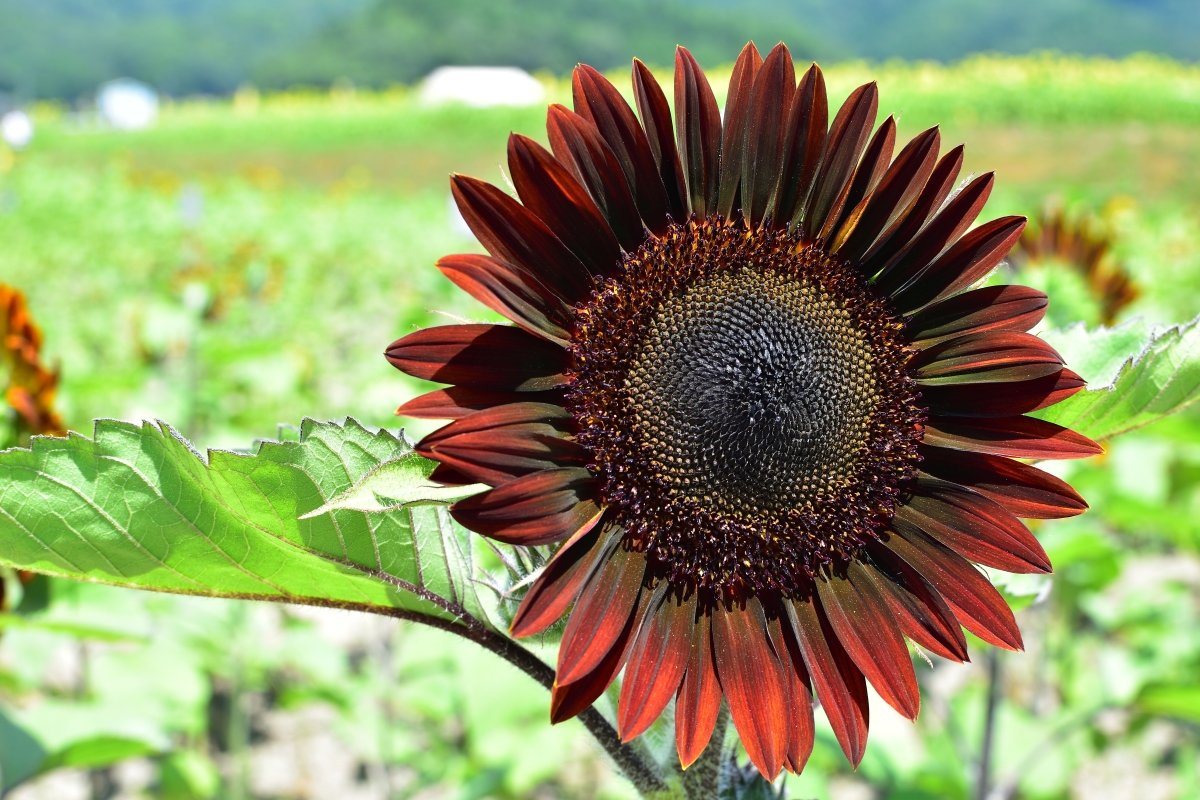
Add some drama to your flower bed with the Moulin Rouge Sunflower. The petals have a deep burgundy matte finish around a dark chocolate center. The deep red single blooms will stand up tall (5 to 7 feet), and look great behind shorter yellow and orange flowers. Each red flower reaches a diameter of 4 to 6 inches, which stands out for pollinators and in cut arrangements.
Hardiness Zones: Annual in Zones 2 to 11
Buy Now: Pack of Eden Brothers Seeds at Amazon for $5.49
10. Valentine
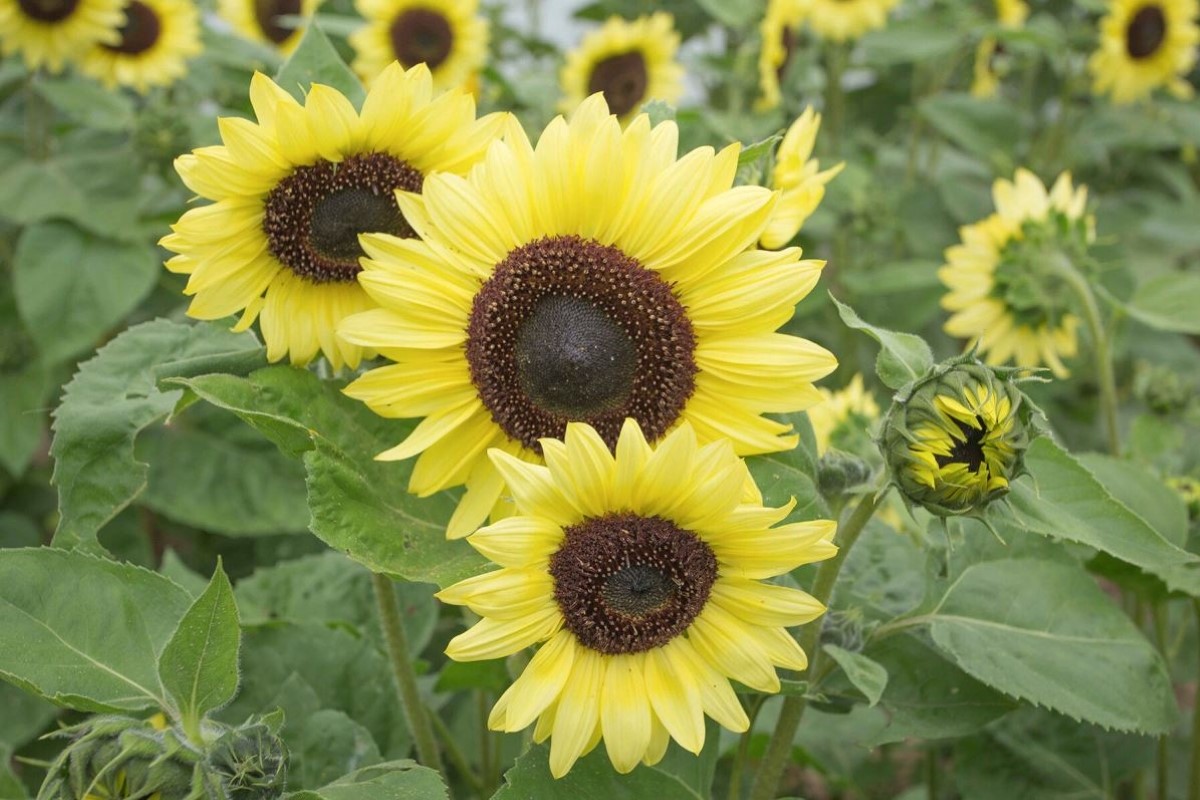
Red blooms might be expected in Valentine Sunflowers, but the petals are a soft lemon yellow. The lighter yellow contrasts well with red sunflowers, bicolor varieties, and the flower’s own chocolate-colored center. Valentine’s blooms reach about 3 to 4 inches in diameter and attract bees and other pollinators. The branching sunflower grows to nearly 5 feet tall and 2 feet wide.
Hardiness Zones: Annual in Zones 2 to 11
Buy Now: 50-Seed Packet at Johnny’s Seeds for $5.95
11. Velvet Queen
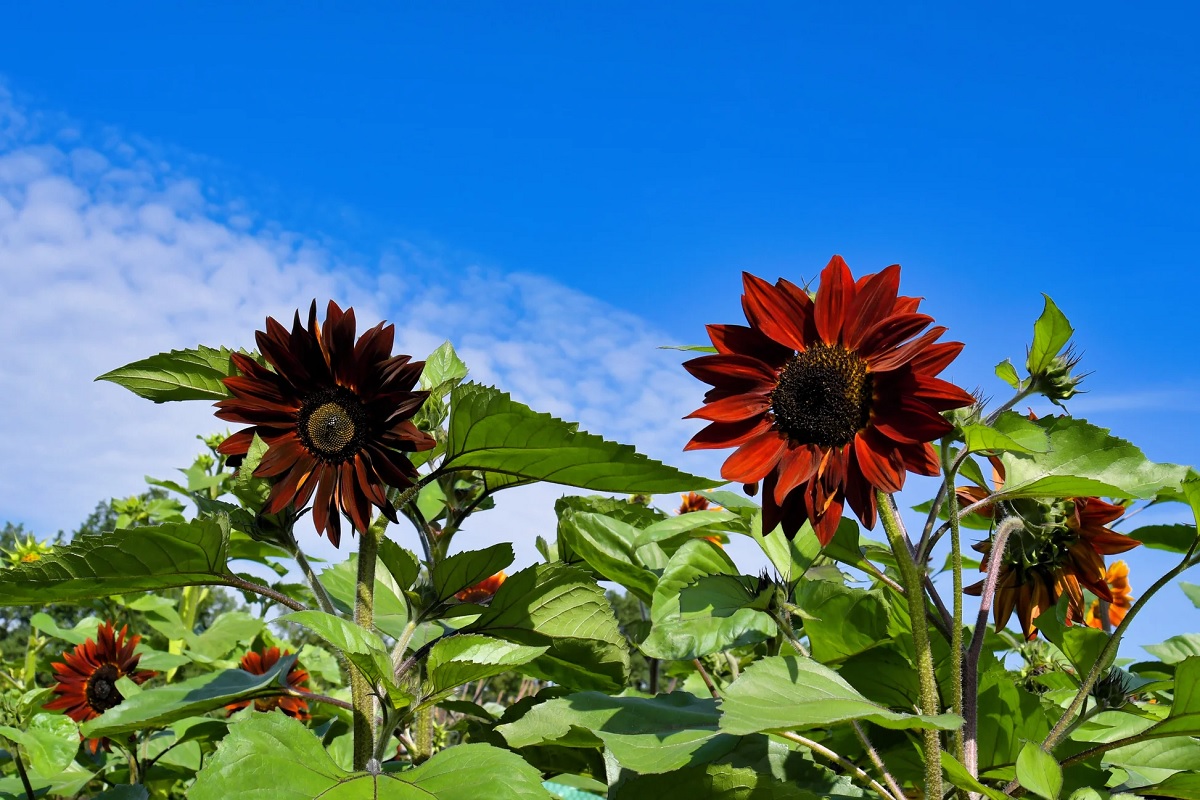
Velvet Queen Sunflower features some smooth, dark red in its blooms, plus attractive foliage. The flower blooms earlier than some, adding its crimson-to-copper petals with traces of yellow to a garden bed. The plant matures in 100 days when its branching growth reaches nearly 6 feet high with lots of 5- to 6-inch blooms. It attracts pollinators but the cut flowers are also favorites for flower arrangements.
Hardiness Zones: Annual in Zones 2 to 11
Buy Now: 20-Seed Packet at Pinetree Garden Seeds for $1.85
12. Skyscraper
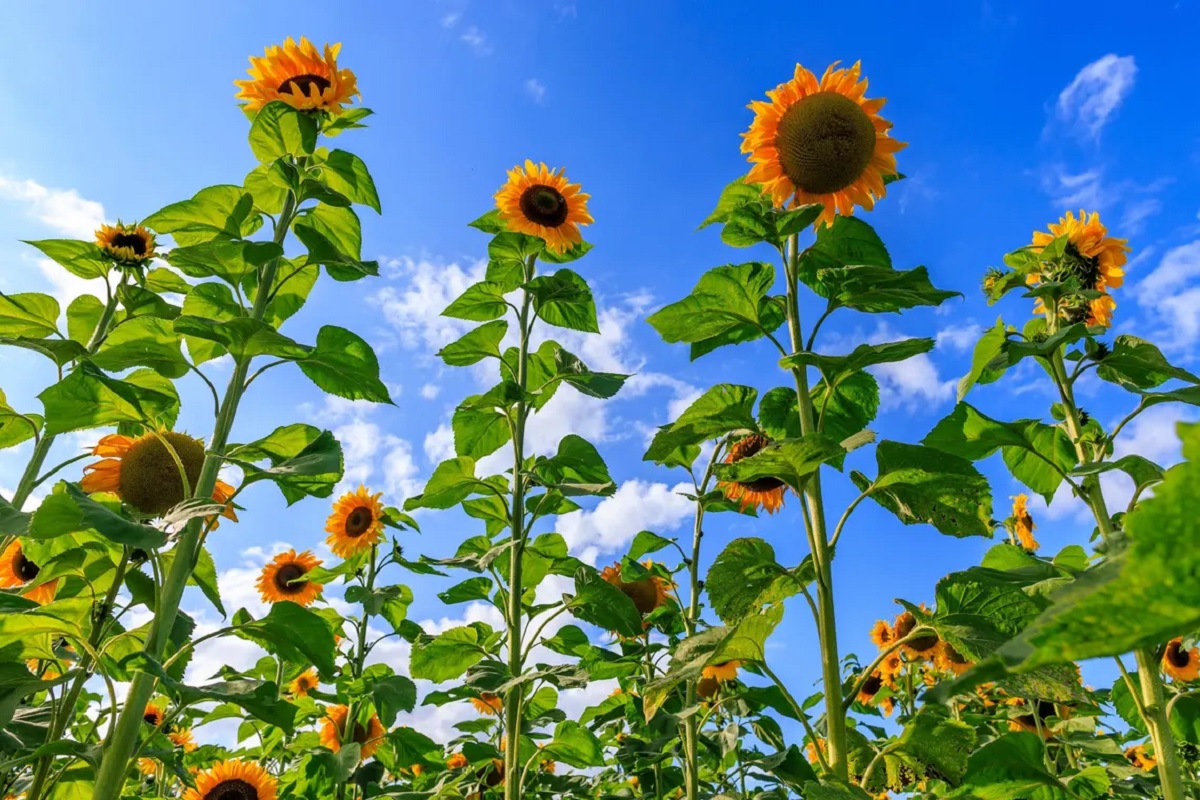
If you like a sunflower with a traditional appearance and color that’s also a tall plant, Skyscraper may fit your needs. Its thick stalks can reach 12 to 14 feet high and bear flowers up to 14 inches in diameter. The heirloom variety grows in a branching habit for plenty of pure yellow color, but the plant might need staking or similar support. Be sure to give it plenty of room to grow and place it at the back of a garden bed. The bees and butterflies will have no trouble finding the flowers.
Hardiness Zones: Annual in Zones 1 to 10
Buy Now: 32-Seed Packet at Eden Brothers for $5.49
13. Busy Bee
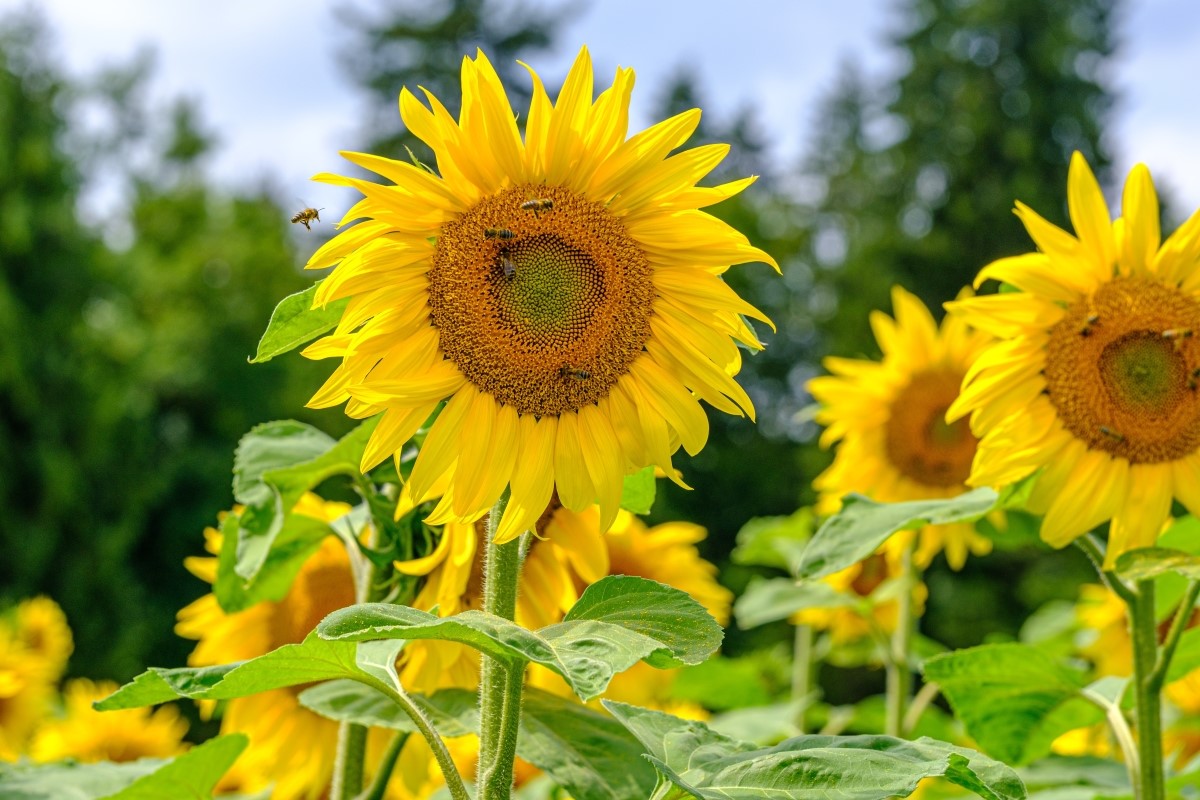
Busy Bee might bloom in standard yellow, but it’s a bee magnet. According to Trautz-Awot, Busy Bee is “a single-stem sunflower producing one bright golden bloom per plant.” Each bloom spans 5 to 7 inches in diameter and has a dark center. Though the plant reaches only 3 to 4 feet high, you can sow seeds several times—a few weeks apart—to have continuous blooms on this sunflower that is “highly attractive to bees and other pollinators drawn to its nectar-rich center.”
Hardiness Zones: Annual in Zones 2 to 11
Buy Now: 50-Seed Packet at Burpee for $5.45
14. Giant Sungold
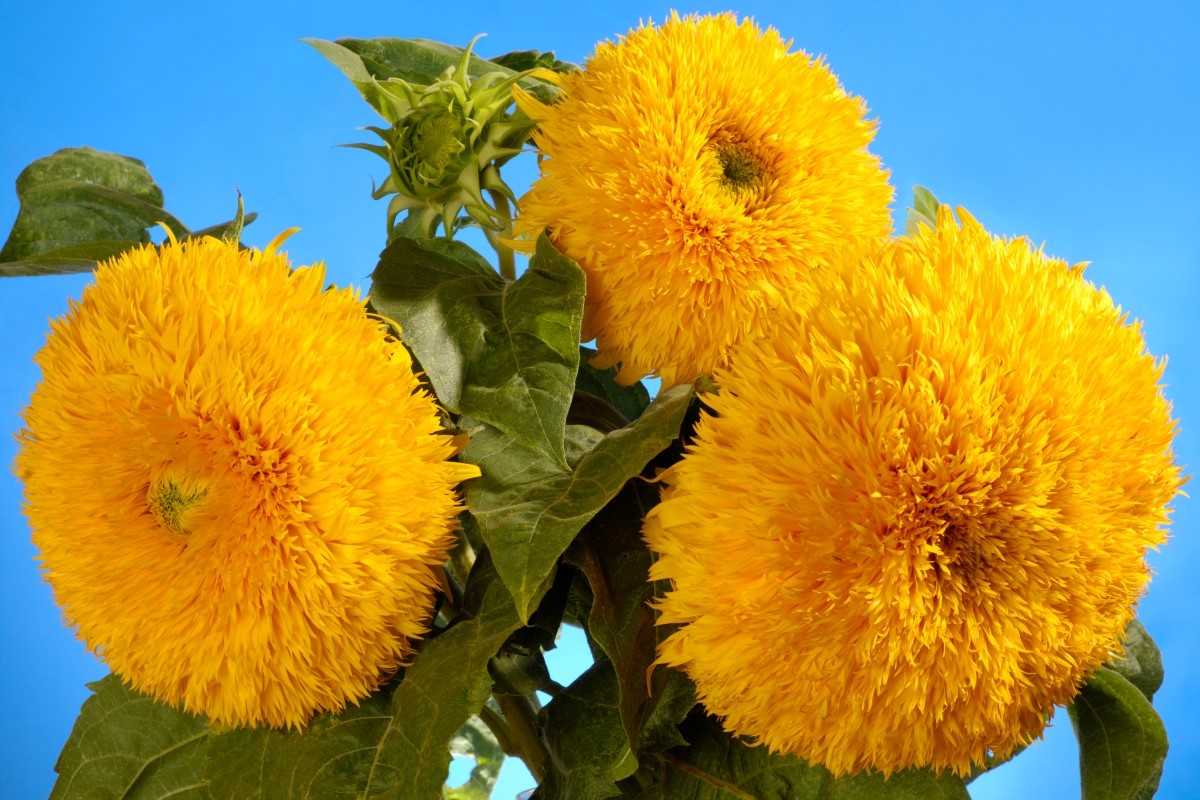
Tall is one attribute many gardeners love about sunflowers, and Giant Sungold delivers. It grows nearly 7 feet high and fills with bright yellow double flowers. The dense flowers resemble Teddy Bear in their fluffy look and smaller centers, but the branching growth produces more than one 5- to 7-inch flower per stalk. This offers gardeners lots of opportunities for giant cut flowers that last a long time.
Hardiness Zones: Annual in Zones 3 to 10
Buy Now: 35-Seed Packet at Uprising Seeds for $4.75
15. Sunspot Dwarf
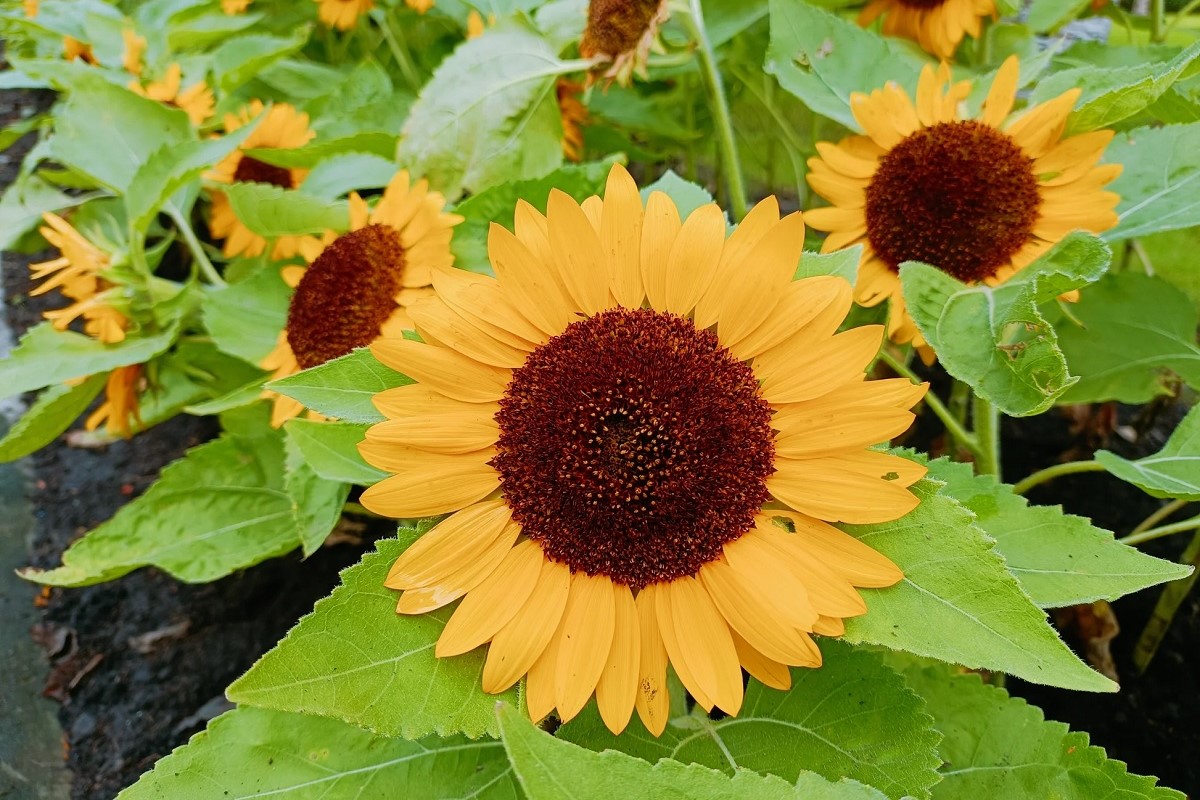
Another sunny option, but on a far shorter plant, is Dwarf Sunspot. Though the stalks reach only 2 feet tall, they bear 12-inch sunflowers with larger-than-normal seed heads. Their diminutive height gives kids a chance to see giant sunflowers up close and personal, and harvest the flower buds before they open. The edible buds taste much like artichoke hearts. It’s good to leave some buds on the plant to attract birds and other pollinators for the fall and winter seeds.
Hardiness Zones: Annual in Zones 2 to 11
Buy Now: 20-Seed Packet at Botanical Interests for $3.49
16. Evening Sun
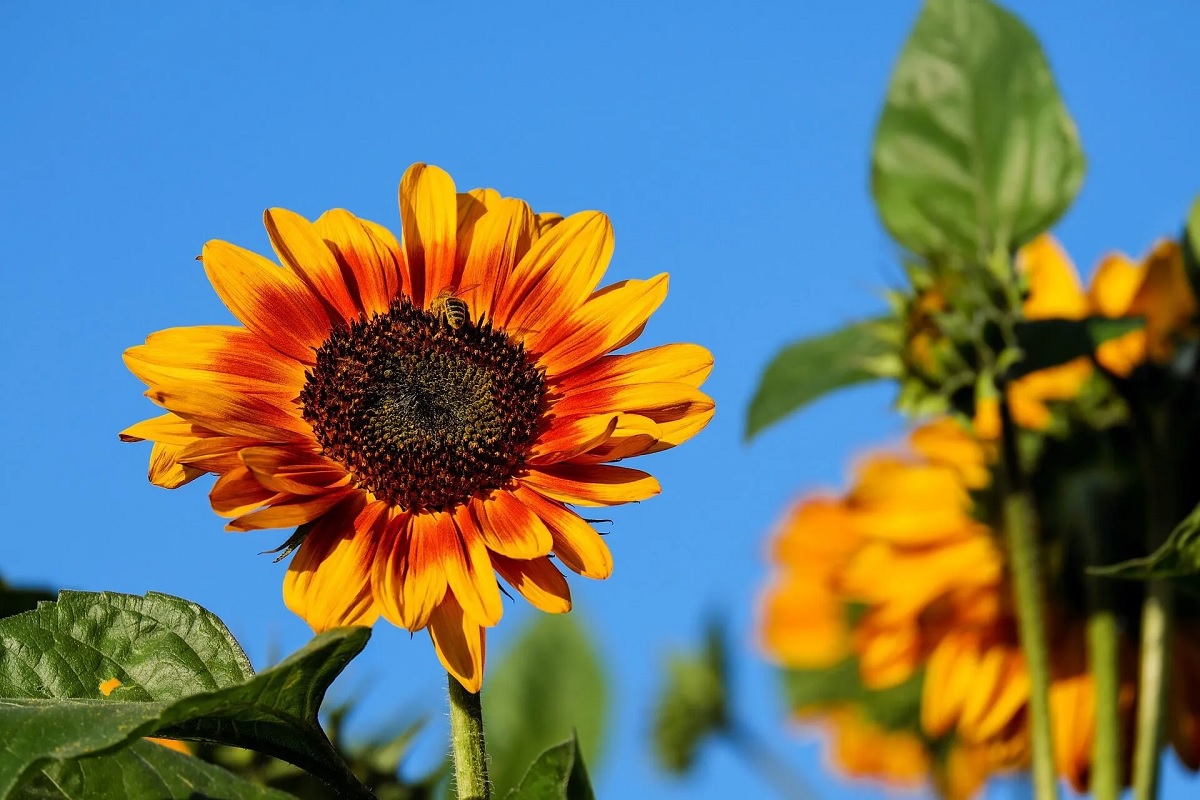
A little darker than some sunflowers, Evening Sun is certainly not short on color. The petals surround a dark center and feature several vibrant shades to resemble summer sunsets. The plant can grow to nearly 7 feet high and spread more than 2 feet wide with its branching habit. It matures in a relatively quick 75 days and works well as a summer screen in a yard.
Hardiness Zones: Annual in Zones 2 to 11
Buy Now: 50-Seed Packet from Harris Seeds for $2.42
17. Jua Maya
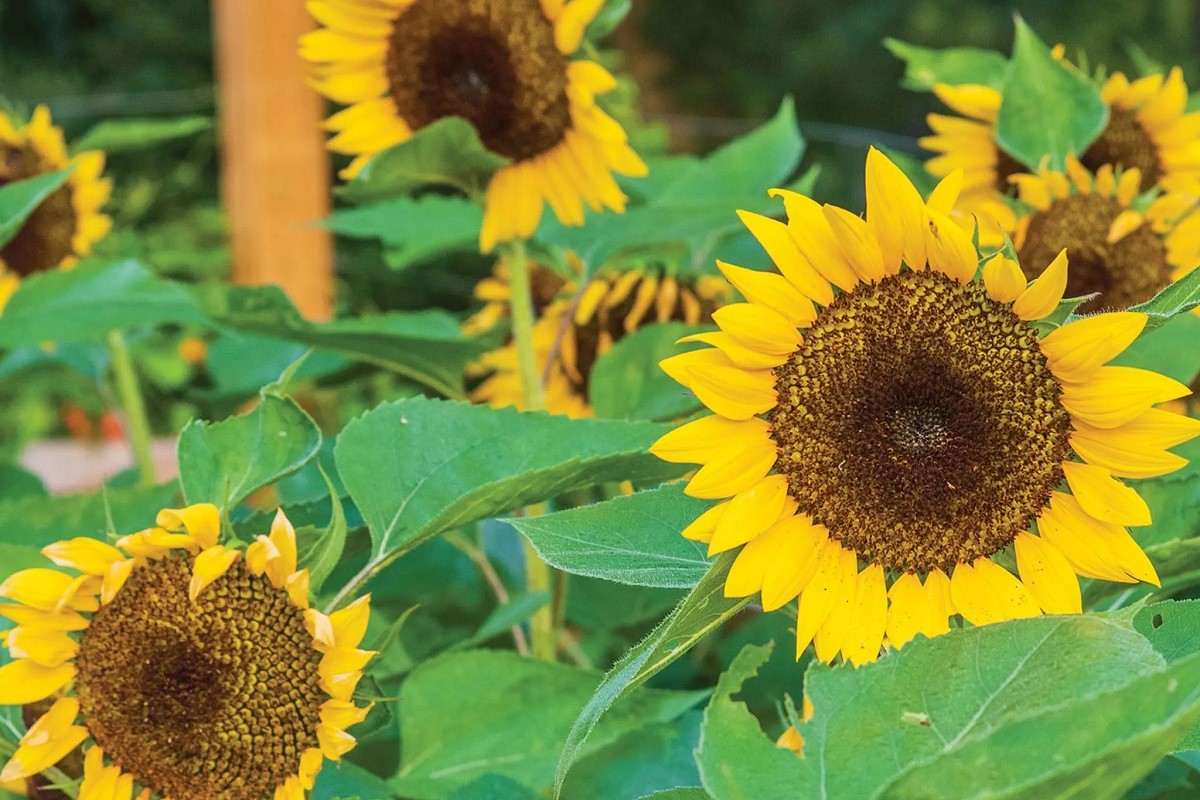
Trautz-Awot calls Jua Maya Sunflower “a fast-growing, pollenless hybrid with rich golden petals and a dark center.” The plant grows to nearly 5 feet tall and produces flowers within 45 to 50 days of planting seeds. It is “ideal for clean, vase-ready cut flowers without pollen drop,” she adds. With its short growth cycle, you can sow seeds in succession a few weeks apart to lengthen the flower harvest.
Hardiness Zones: Annual in Zones 2 to 11
Buy Now: 45-Seed Packet at Burpee for $5.95
18. Soraya
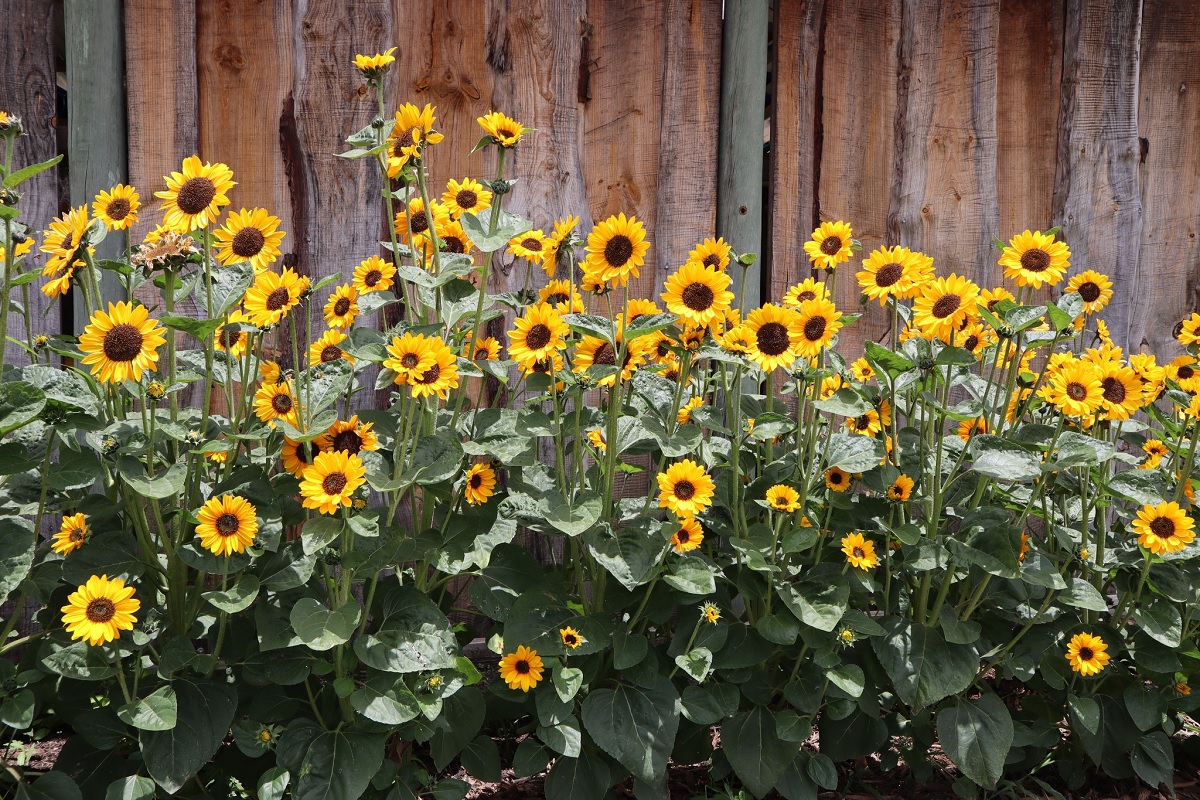
If your tastes lean more toward orange than yellow, try Soraya Sunflower. The former All-America Selection winner performs well with little effort. That includes up to 25 branches per plant to bear the charming orange flowers with chocolate brown centers. Blooms average 4 to 6 inches in diameter on a plant that grows to 5 feet high. Soraya is a great choice for the back of garden beds and the color will complement soft blues and whites. It’s also great as a cut flower.
Hardiness Zones: Annual in Zones 2 to 11
Buy Now: 50-Seed Packet at Johnny’s Seeds for $5.95
19. Floristan
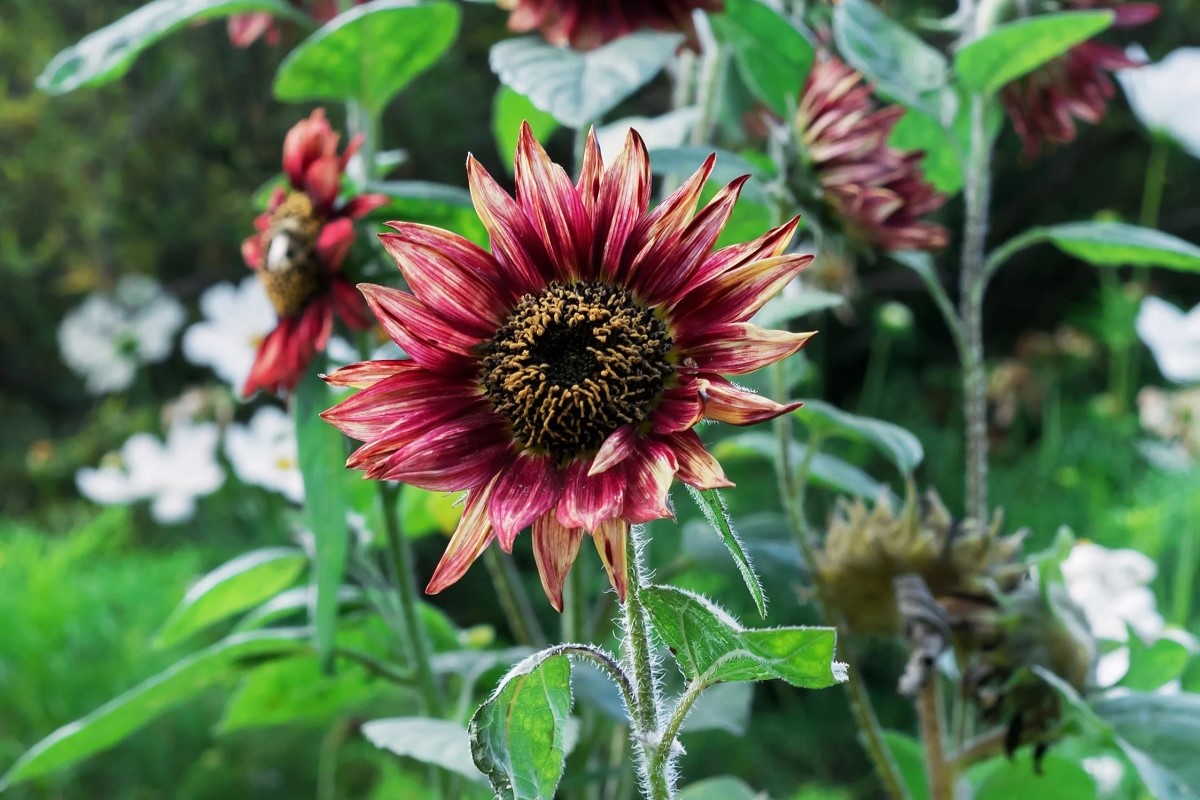
In the garden or in a vase, Floristan Sunflower is the perfect complement to the yellows and golds of typical sunflowers. The flower features multiple shades of dark ruby red tones with dots of yellow near a dark brown center and on the petal tips. The open-pollinated plants reach only 3 feet high with side branches to produce plenty of cut flowers. Floristan is another quick grower, and with only 45 to 55 days from seed to flower, you can sow seeds in succession.
Hardiness Zones: Annual in Zones 2 to 11
Buy Now: 22-Seed Packet at Territorial Seed Company for $3.75
20. Topolino
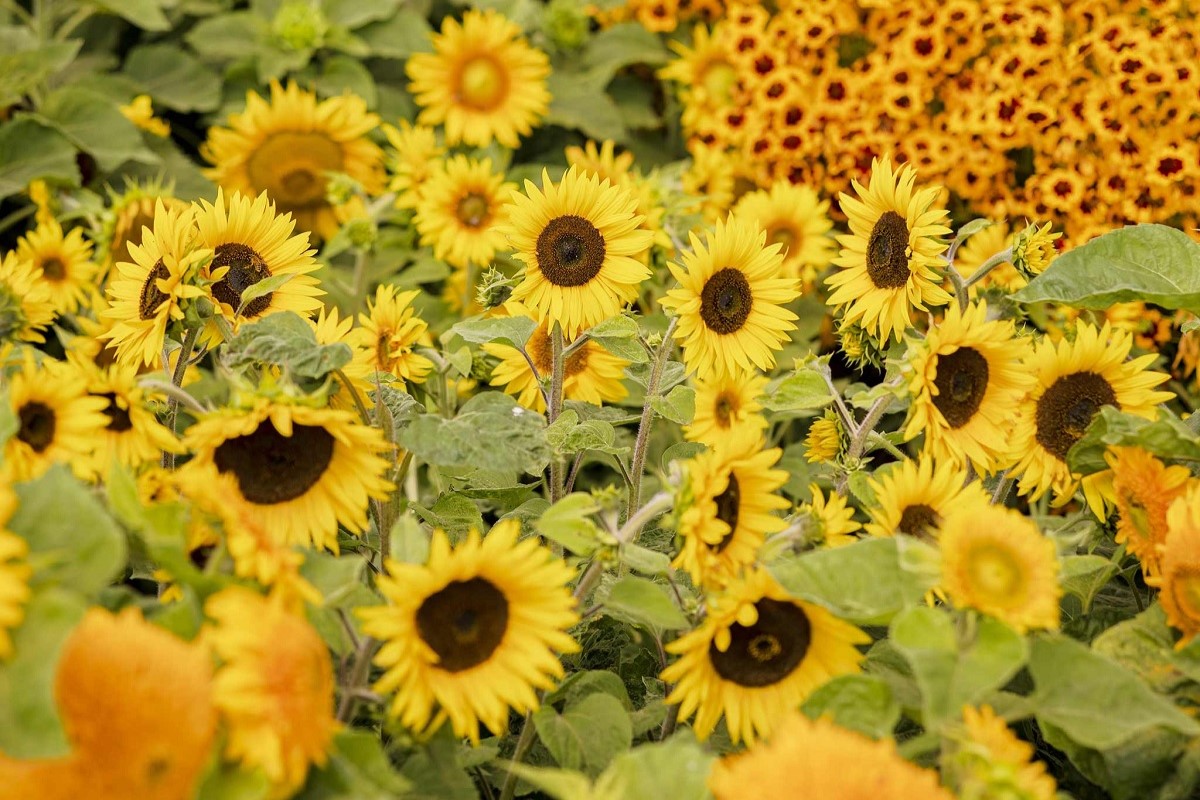
An heirloom dwarf variety, Topolino Sunflower grows to less than 18 inches tall but branches out for good flower production. It’s an excellent type of sunflower for containers and low borders and for bunched cut flowers. The dwarf plant is easy to grow and attracts butterflies, bees, and other pollinators in the garden.
Hardiness Zones: Annual in Zones 1 to 10
Buy Now: 40-Seed Packet at Eden Brothers for $4.99
Perennial Sunflowers
In some growing zones, these perennial sunflowers will come back again, and annuals often reseed.
21. Maximilian (Helianthus maximiliani)
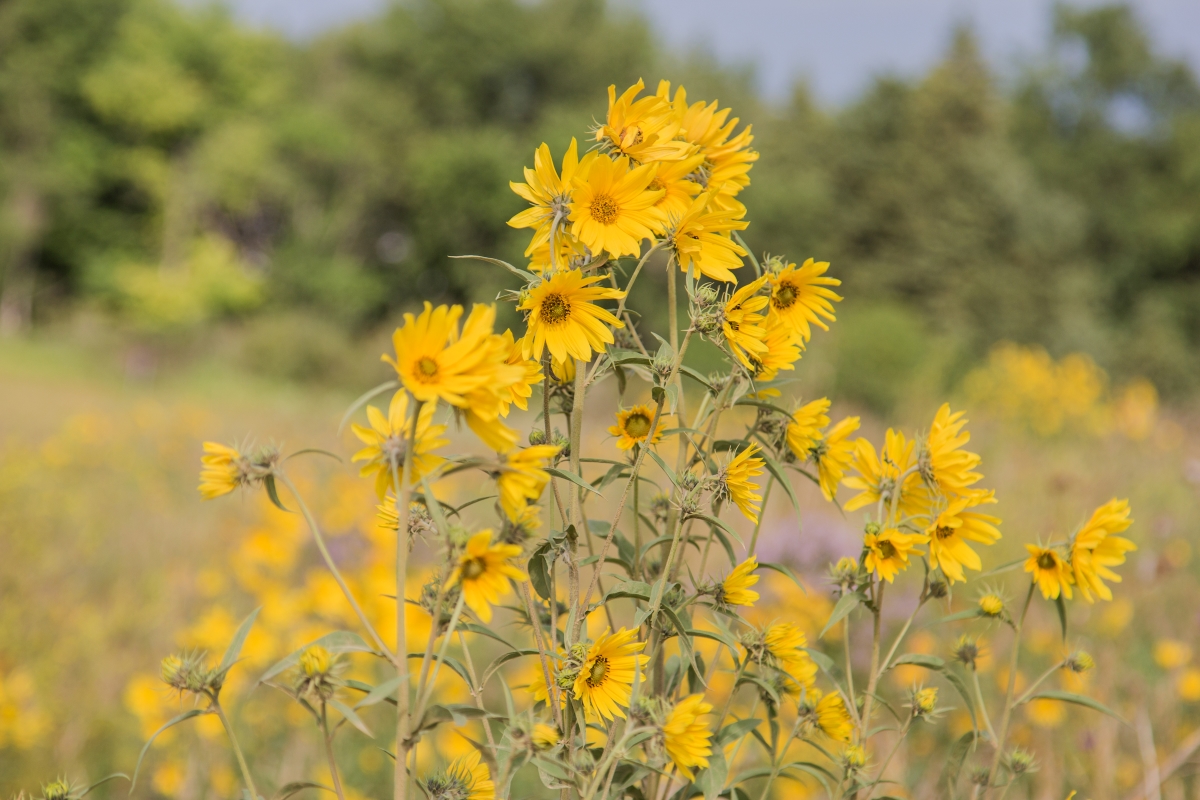
The American native sunflower called Maximilian is a tough perennial type of sunflower that handles heat, cold, and drought well. It hails from Western prairies and the seeds are a great food source for native birds and the nectar is good for bees and butterflies. Plant height can vary based on soil, sun, and moisture conditions, and ranges from 3 to 10 feet.
The sunflowers will spread each year as well, though they should not cause any problems in the garden. Give the plants a little extra water their first year. After that, they can handle drought just fine; in fact, overwatering can make the stalks too long and floppy. Leave the stalks through winter for their wildlife value and cut them down to only a few inches above ground in early spring.
Hardiness Zones: Perennial in Zones 3 to 9, depending on variety
Buy Now: Potted plant at Spring Hill Nurseries for $9.99
22. Swamp (H. angustifolius)
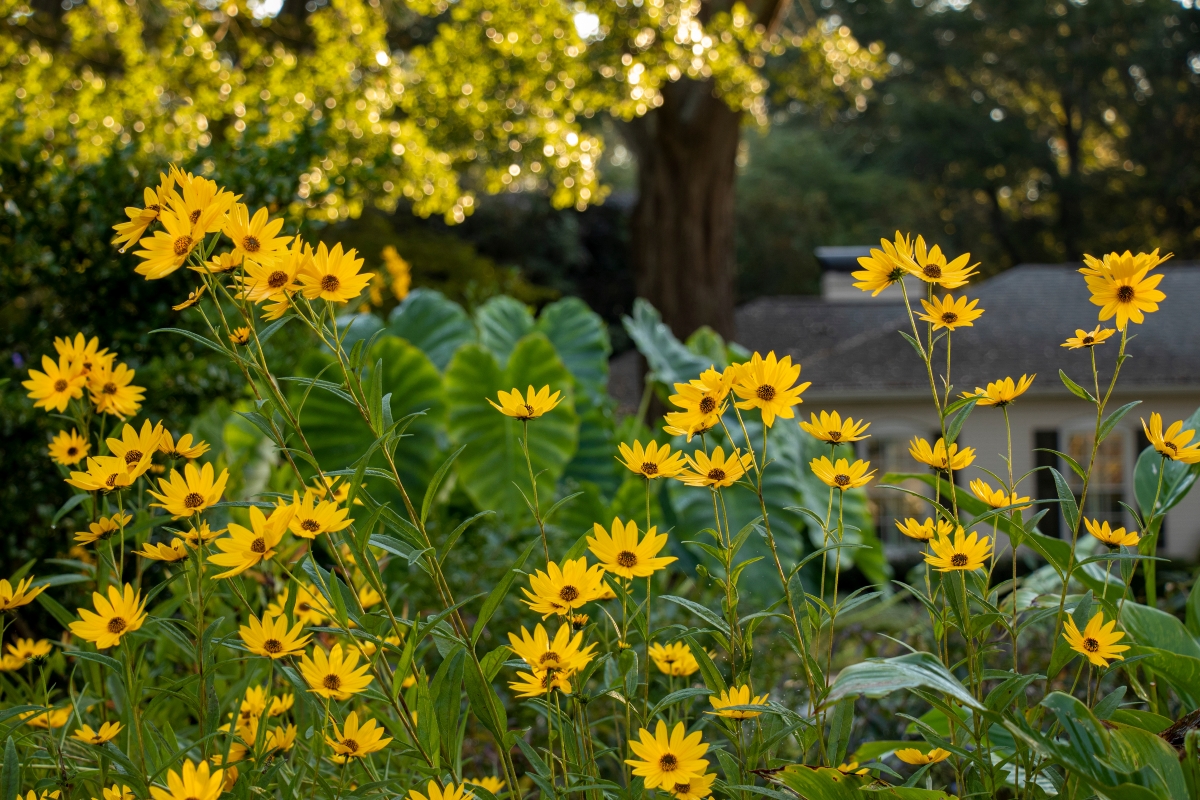
A New York native, Swamp Sunflower used to be classified as a coreopsis, but the perennial is now considered a member of the sunflower species. Its range spreads all the way down to Florida and into Texas. Growing to about 3 feet tall in a clumping form, Swamp Sunflower spreads easily in garden beds and provides nutritious seeds for wildlife. It thrives in full sun or part shade. This is a rare type of sunflower and harder to purchase than some; it’s even considered a threatened species in a few states. The rarest sunflower, H. Schweinitzii, is another perennial that is already endangered. Still, you can find Swamp sunflowers in seed or plant form.
Hardiness Zones: Perennial in Zones 5 to 9
Buy Now: Root Clumps at Etsy for $15
23. Willowleaf (H. salicifolius)
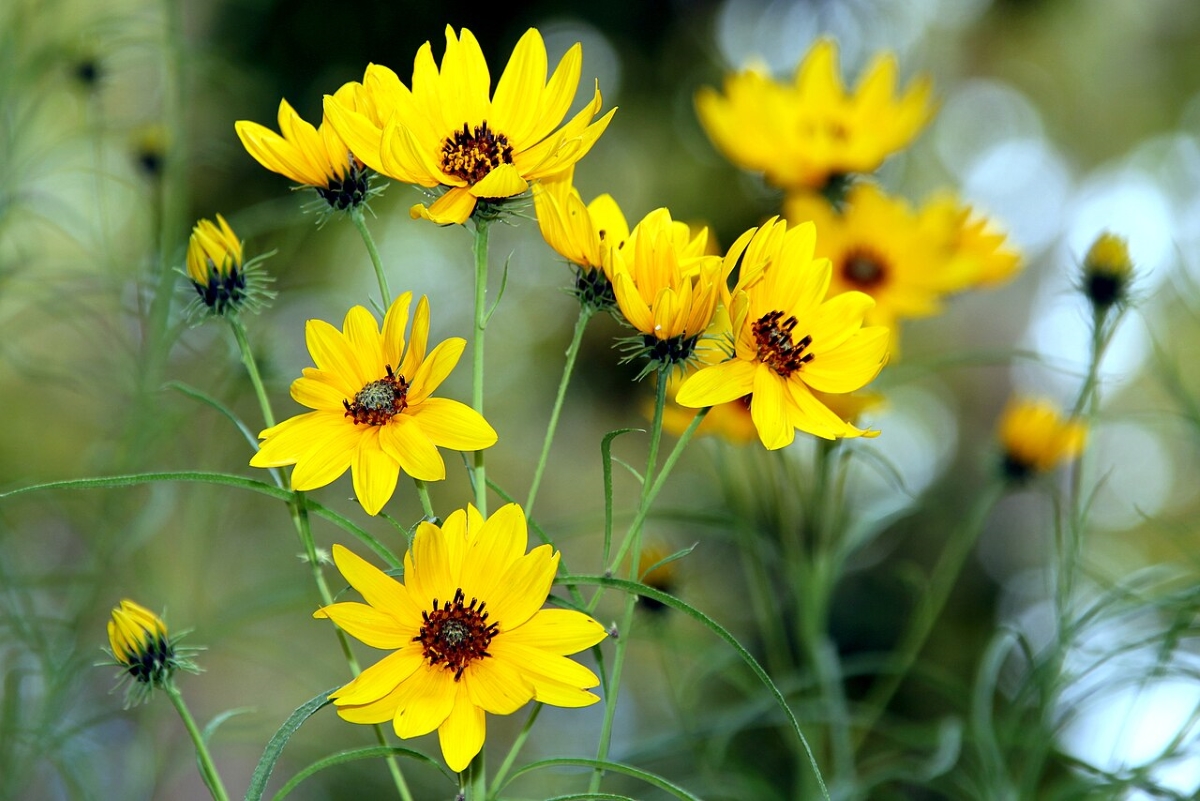
Willowleaf Sunflower is another native perennial that grows naturally in the Great Plains and Ozark Plateau. Trautz-Awot recommends Autumn Gold Willowleaf, which she describes as “a compact perennial sunflower, about 2 feet tall, with fine willow-like foliage.” The tightly mounded plant features numerous 2-inch flowers with light centers. Its foliage also differs from many annual sunflowers, with a fern-like softness.
Bees love the flowers, plus native bees are known to make nests in the hollow stems left after flowering. Cut the stems to about 1 to 2 feet tall and they will fade on their own. According to Trautz-Awot, they bloom in early fall and add “strong seasonal color to the autumn garden.”
Hardiness Zones: Perennial in Zones 4 to 9 (5 to 9 for Autumn Gold)
Buy Now: 3-Inch Pot at American Meadows for $9.99
24. Sunshine Daydream (H. xmultifloris)
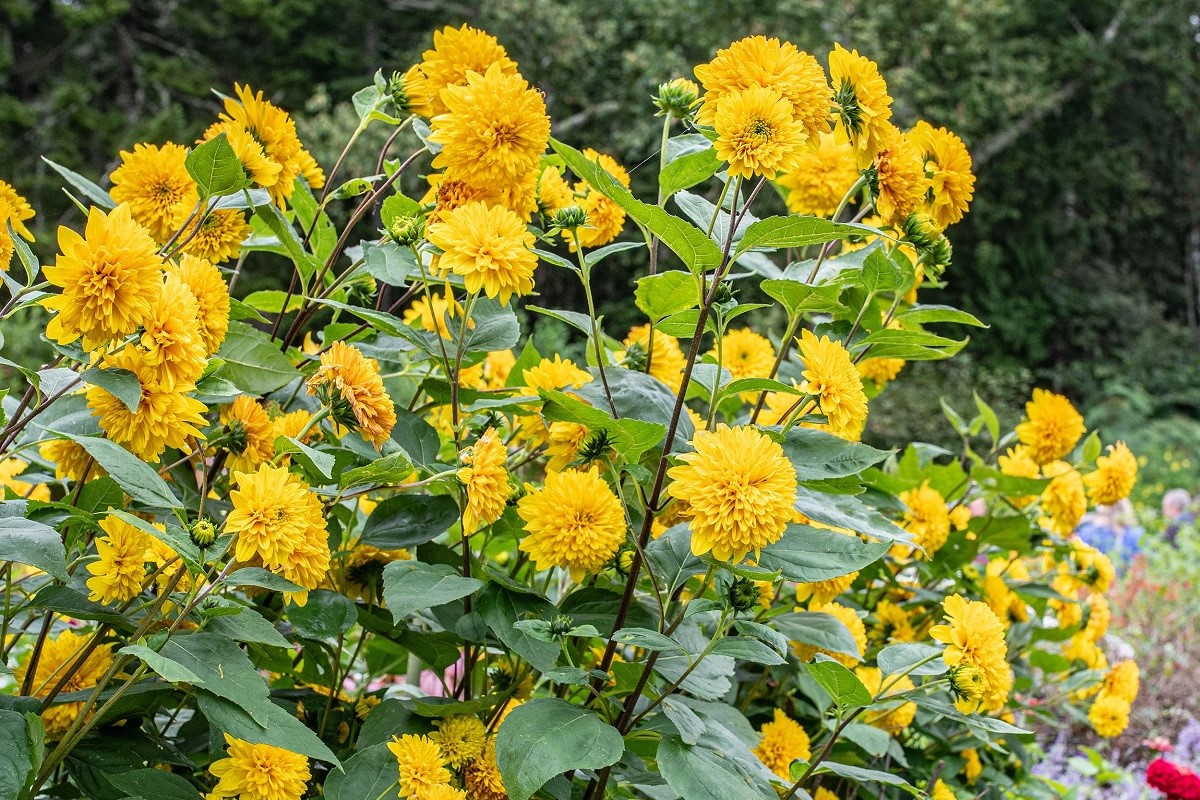
Crossing annual sunflowers with a perennial species is thought to have resulted in several cultivars of sunflowers with double-petaled flowers, including Sunshine Daydream and Capenoch Star. The perennial sunflowers bloom later in summer than annuals, from about August to October. Sunshine Daydream will reach about 5 to 6 feet high and 2 to 4 feet wide, and produce showy bright yellow flowers with gold centers.
The perennial sunflower can spread to form clumps filled with double yellow blooms that resemble dahlias more than traditional sunflowers. The plant is hardy and drought tolerant once established.
Hardiness Zones: Perennial in Zones 4 to 8
Buy Now: 3.5-inch Potted Plant at US Perennials for $9.99
25. Woodland (H. divaricatus)
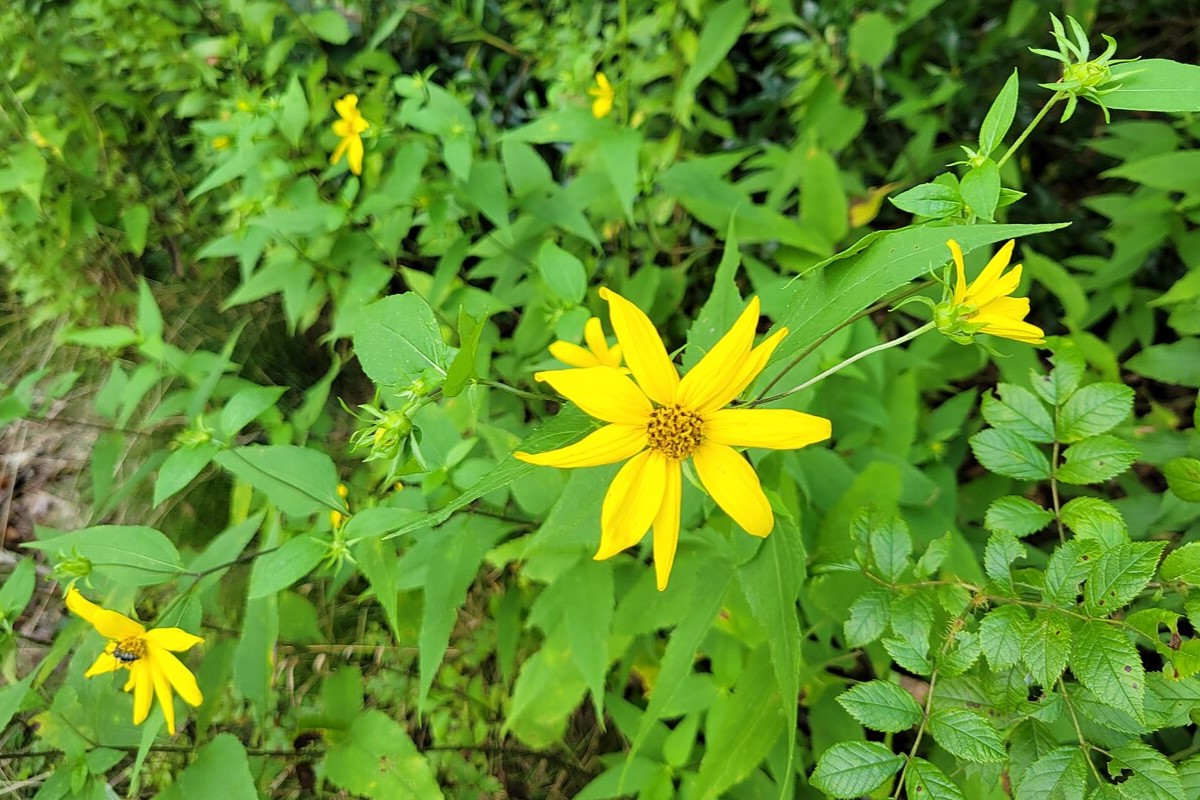
The erect perennial Woodland Sunflower spreads by rhizomes to form clumps, as it does in its native areas of Southeastern Canada and Northeastern United States. The woodland plant is seen in thickets as far south as North Carolina. Its nectar has significant wildlife value and it is a host plant for Silvery Checkerspot butterflies. Each plant grows from 2 to 6 feet tall, depending on conditions. It is likely to reach full height in full sun, but grow less tall in partial shade. Although its flowers are only 1 to 3 inches wide, they are good for cutting. The Woodland Sunflower has attractive light green to purple stems and yellowish to green leaves.
Hardiness Zones: Perennial in Zones 3 to 8
Buy Now: 10-Seed Packet at Etsy for $7.95
All You Need to Care for Your Lawn & Garden