
4 Designer-Approved Amazon Hacks for Open Floor Plans

:max_bytes(150000):strip_icc():format(jpeg)/rsp-interior-designer-and-these-are-my-best-hacks-tout-e5241137237b46b289249fe56372fcb1.jpg)
When you’re decorating a home with an open floor plan, it can be a major challenge. How do you turn one big empty room into defined areas that serve all the different functions and purposes you need them to? And then, how do you make them all feel aesthetically cohesive together? Lucky for you, as an interior designer, it’s my job to figure all of that out (and more!) for you.
If you’re struggling with your own open floor plan, I’ve put together some of my best tips for creating a dreamy space with all of the different zones you want to incorporate. The best part is, you can follow these hacks while working with any budget, whether that means conveniently shopping on Amazon with the products I curated below, shopping at high-end designer stores, or thrifting second-hand items that speak to you.
Keep scrolling for my open floor plan hacks along with all of the Amazon picks you’ll need to go with them, and you’ll be fixing your open floor plan woes in no time.
Designer-Approved Open Floor Plan Amazon Hacks
- Gertmenian 8-Foot by 10-Foot Boho Indoor Area Rug, $106
- Safavieh 7-Foot Round Natural Fiber Jute Area Rug, $118
- Arogan Premium 4.6-Foot by 5.2-Foot Faux Cowhide Rug, $36
- Darkaway Hammered Metal Pendant Light Fixture, $49 with coupon, (was $55)
- Lanicho Tall Gold Arc Floor Lamp, $70, (was $80)
- Tangkula 8-Cube Modern Open Step Bookshelf, $80
- Yatiney 63-Inch Behind-the-Sofa Console Table, $50, (was $66)
- Hazo Rattan Velvet Dining Chairs, Set of 2, $139
- Juspurbet 18-Inch by 18-Inch Velvet Throw Pillow Covers, $14
- Nemia Moss Green Velvet Blackout Curtains, $45
Hack 1: Define Spaces With Area Rugs
The easiest way to define any space—be it a seating area, a dining area, or otherwise—within a room is to use area rugs as an anchor for your furniture in those spaces. One area rug lays the foundation for a sofa, coffee table, and lounge chairs, while another nicely frames the dining table and chairs, and another can even create a zone for reading, board games, or for kids to play. But that doesn’t necessarily mean slapping down a bunch of similar rectangular rugs for each area, which can lack dimension.
I like to use rugs in different shapes and materials, or textures for a more layered, interesting look instead. So, you might use a large rectangular rug like this pretty floral pick from Gertmenian for your living “room” seating arrangement, a round or oval rug under the dining table (this boho jute option from Safavieh is a stunner!), and a more interesting or organically-shaped rug (think: a faux hide like this one from Arogan or sheepskin, for instance) to create a reading nook or a kids’ area. Optional: With these more uniquely-shaped rugs, I like to place them overlapping a corner of the main seating area rug, which works especially well in smaller spaces with open floor plans.
Gertmenian 8-Foot by 10-Foot Boho Indoor Area Rug
Amazon
Safavieh 7-Foot Round Natural Fiber Jute Area Rug
Amazon
Arogan Premium 4.6-Foot by 5.2-Foot Faux Cowhide Rug
Amazon
Hack 2: Highlight Each Area With Lamps
Lighting is essential in any and all spaces to create ambiance and light the way for the different tasks we do in a room, but the way you use lighting can help you differentiate spaces throughout an open concept space, too. Think about how a set of pendant lights work like a spotlight, drawing your eyes to the kitchen island, or how a statement chandelier feels right at home centered over a dining table, creating its own focal point. You can even recreate this in your living area by hanging a pendant like this versatile hammered metal fixture, a chandelier, or a lighted ceiling fan, which will also add airflow, over the center of your seating arrangement.
And while installing these kinds of light fixtures is, of course, a lot easier when you own your home and can bring in a contractor to take care of it without worrying about changing your space, there are ways to do it in a rental, too. If you want to go this route, you can skip the electrical altogether by simply tucking the cord into the canopy of the light before screwing the canopy into the ceiling (all it takes is a quick patch with spackle and paint to fix this before you move out!) and then using a USB-rechargeable lightbulb in place of a regular bulb. (I use ones like these from Amazon in my rental, and I love them!) Or, if you want to skip the handiwork altogether, go with a tall arc-shaped floor lamp like this gold light from Lanicho that will give the illusion of a light fixture hanging over the middle of a space.
Darkaway Hammered Metal Pendant Light Fixture
Amazon
Lanicho Tall Gold Arc Floor Lamp
Amazon
Hack 3: Use Furniture as Room Dividers
If rugs and lighting don’t feel like enough of a divider between your different zones, furniture can definitely help. You can go literal by using a piece of furniture that is designed to serve as a divider, like this open-step cube bookcase that is finished on all sides. Place it perpendicular to the wall in between, say, your living area and dining area (or entryway, if your front door opens right into your open floor plan!) and you’ve got a physical divider there that doesn’t actually take up much space, doubles as storage and display for your favorite books and decor, and is open enough to let light bounce throughout the room.
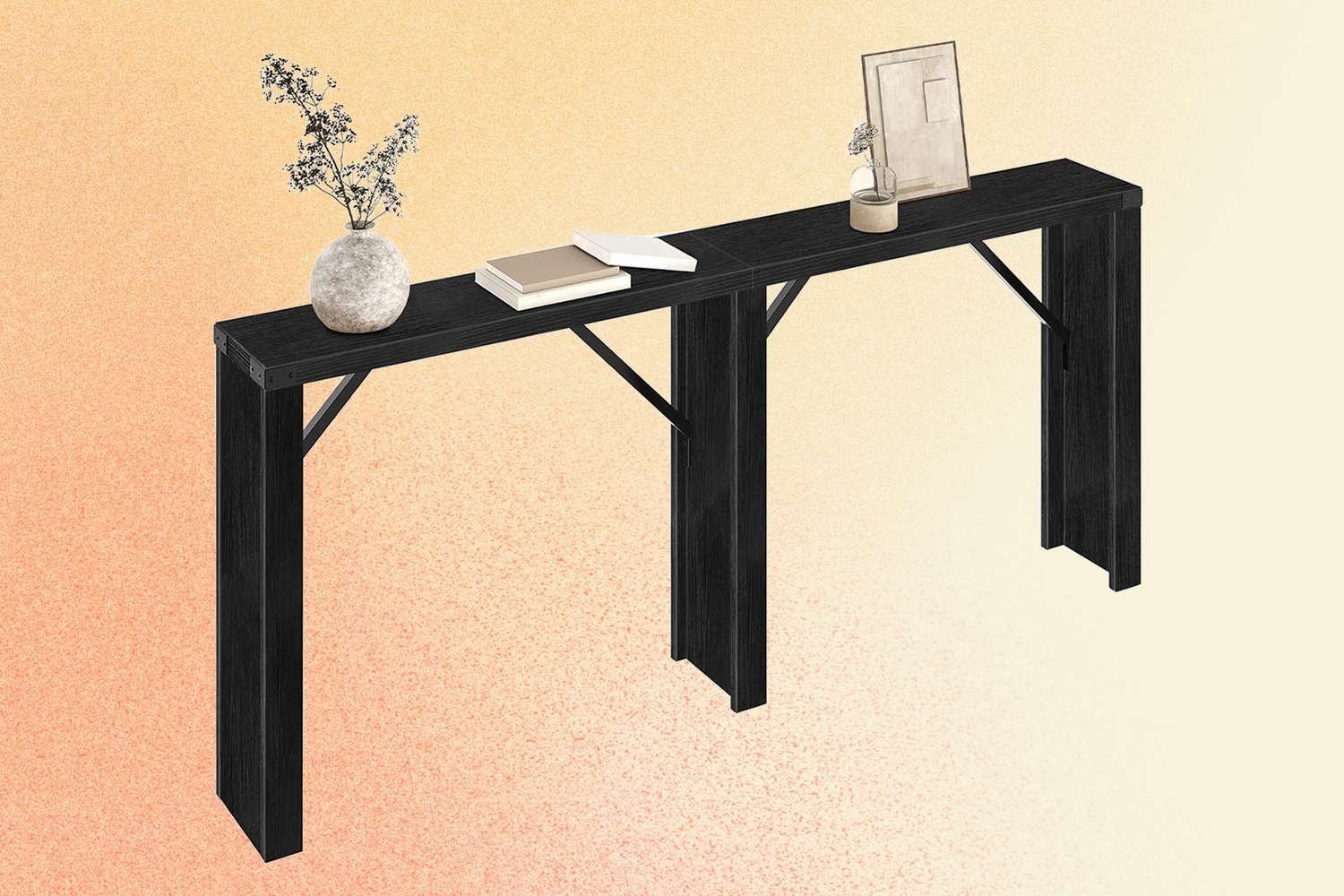
Another option is to float your sofa instead of placing it against a wall, then putting a long console table behind it to act as a sort of divider that defines where the living area begins. For this option, you’ll want to make sure the back of your sofa is finished, so it looks nice and sleek. Then, choose a console table like this wooden table from Yatiney that’s about two-thirds to three-quarters the length of your sofa and either the same height as or slightly shorter than the back of your sofa, and place it against the back of the couch. Place books, lamps, other accents—whatever you want!—on top to decorate it. If you need more storage, you can even add a few baskets underneath the table to stash things like extra throw blankets, or, you can put a set of small ottomans there for extra flex seating when you need it. And for a particularly small space, make sure you choose a console that’s extra narrow.
Tangkula 8-Cube Modern Open Step Bookshelf
Amazon
Yatiney 63-Inch Behind-the-Sofa Console Table
Amazon
Hack 4: Repeat Textures and Colors Throughout
And now to bring it all together: It’s all about making things look intentional, not just pretty. The simplest way to achieve this is to decorate in multiples by repeating the same textures and colors throughout each area of your open-concept space. That means that if you introduce a color or texture into the dining area, you should find a way to repeat that same color and/cor texture in the living area (and any applicable nooks you’ve created!), too.
Here’s an easy, straightforward example: Say you love these retro-inspired rattan-back velvet dining chairs in this beautiful olive green color and want to make them work in an open floor plan. You can easily incorporate them into your main living area seating arrangement by adding matching olive green velvet throw pillows to your sofa. (This set of two velvet shams that coordinate perfectly is just $14!). If you’ve got a reading nook set up in front of the windows, bring that green velvet there, too, with a set of matching curtains like these blackout panels from Nemia. And while you might not want velvet in your kitchen, per se, if your kitchen is open to the rest of the space, you can then bring in that same olive green color with different accessories or even custom appliances, if you really want to lean in. Et voilà: Olive green (and velvet) becomes the string that ties each individual area together.
Hazo Set of 2 Rattan Velvet Dining Chairs
Amazon
Juspurbet 18-Inch by 18-Inch Velvet Throw Pillow Covers
Amazon
Nemia Moss Green Velvet Blackout Curtains
Amazon